

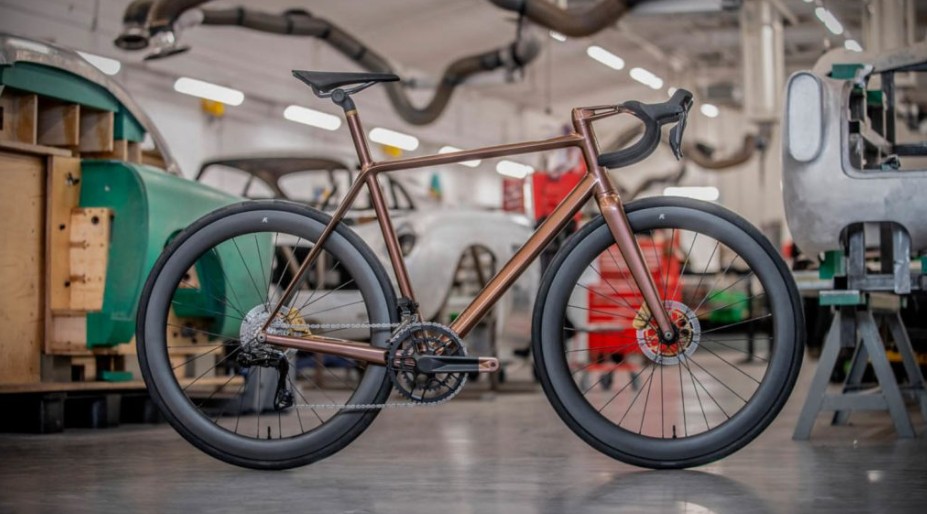
U.K.-based frame maker J.Laverack teamed up with Aston Martin and Renishaw to create a limited-edition road bike called the “.1R” that emphasizes craft, performance, and unique manufacturing, tells this interesting article from Develop 3D. The goal: eliminate visible bolts, deliver custom geometry, and combine titanium lugs with carbon-fiber tubes for a visually seamless aesthetic.
Rather than relying on mass-production methods, the bike uses metal additive manufacturing (AM) to produce key titanium parts such as lugs, head tube, dropouts, and brackets. Renishaw handled the build process using its RenAM 500Q system for 6Al/4V titanium, with 30-µm layer resolution and design strategies aimed at eliminating internal supports. Internal lattice structures helped reduce weight while maintaining stiffness.
The bespoke nature is central: every frame is made to the rider’s exact measurements, enabling tailored component layouts, unique frame sizing, and custom handlebars. Traditional bolt clamps and visible fixings were intentionally removed, giving the bike its “boltless” aesthetic. Brake hoses are integrated within the handlebars, and the finish reflects Aston Martin’s styling heritage.
The collaboration highlights how AM enables low-volume, highly customized, and technically advanced products that merge design and engineering. J.Laverack describes the .1R as “the world’s first ‘boltless’ bicycle,” weighing around 7.5 kg. The project also marks a step for the company: they now plan to bring AM-driven designs into their standard product range after this ultra-premium run.
For engineers and designers, the story illustrates how AM can serve not only functional performance but also aesthetic differentiation and luxury branding. By combining custom geometry, lattice-infused titanium parts, and advanced build strategies, the boundary between craft and high-tech is blurring.
