

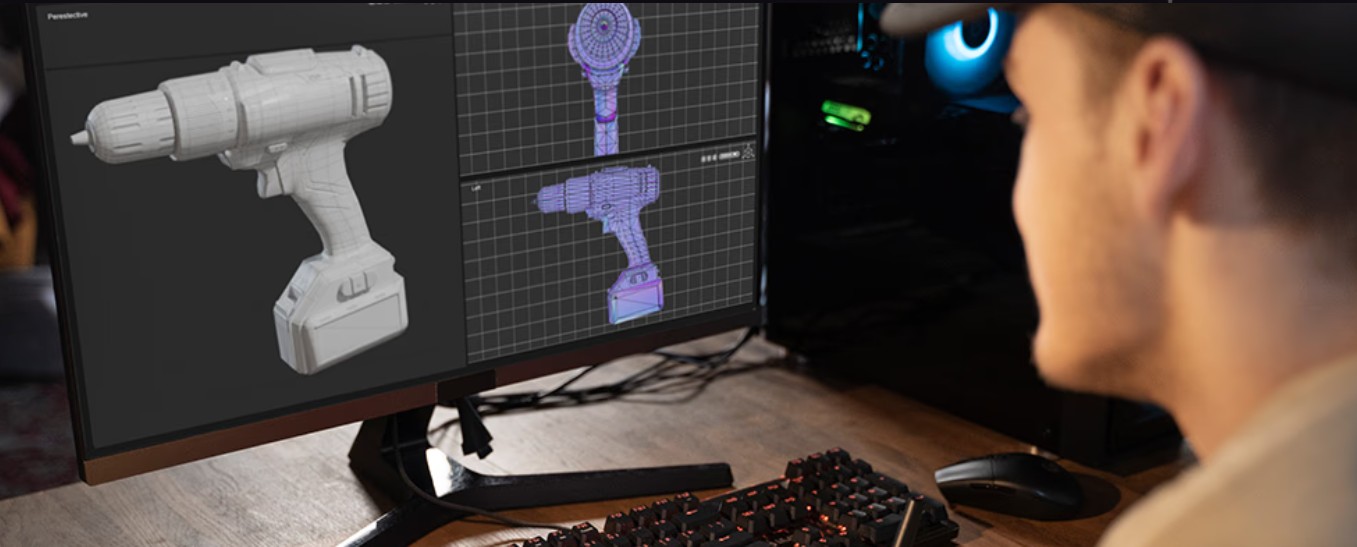
Autodesk Fusion 360 provides an integrated generative design environment that enables engineers to explore optimized geometries while considering structural performance, materials, and manufacturing constraints. However, specialized applications can extend its capabilities for more demanding engineering tasks, tells Leo AI.
Fusion 360’s native generative design workspace allows users to define design spaces, preserve regions, obstacles, loads, and constraints. Its cloud-based optimization engine generates multiple design alternatives, enabling comparisons based on mass, stress, displacement, and manufacturability.
The software supports additive manufacturing, CNC milling, die casting, and unrestricted optimization. However, limitations remain in multibody optimization, dynamic loading, coupled thermal-structural analysis, and converting complex mesh geometries into fully parametric models.
Several complementary tools address these challenges. Ansys Discovery provides real-time simulation and topology optimization with greater structural analysis capabilities. Altair Inspire extends optimization through lattice generation and parametric design, while nTopology specializes in complex lattice structures, conformal cooling channels, and functionally graded geometries for additive manufacturing.
AI-assisted tools introduce additional possibilities. Claude, connected through the Model Context Protocol (MCP), enables natural-language modeling commands and workflow automation within Fusion 360.
Leo AI focuses on engineering knowledge rather than geometry generation. Through Autodesk Vault integration, engineers can search existing designs, retrieve technical information, and verify design constraints against engineering standards before beginning optimization.
This approach addresses a significant limitation of generative design: Optimized geometry alone does not guarantee manufacturing feasibility or compliance with engineering requirements.
The article recommends combining engineering knowledge retrieval, generative optimization, simulation, and postprocessing into a coordinated workflow. Engineers can identify reusable components, establish appropriate constraints, evaluate generated alternatives, and document validated results.
Ultimately, combining Fusion 360 with specialized optimization and AI tools can help engineering teams reduce redundant work, improve design decisions, and develop manufacturable components that satisfy technical requirements.
