

Human vision is far more than a simple recording of the world. According to researchers at the University of Rochester, what people perceive as reality is actually the brain’s interpretation of constantly changing visual information. This insight is reshaping scientists’ understanding of perception and helping engineers design more convincing augmented reality (AR) and virtual reality (VR) systems.
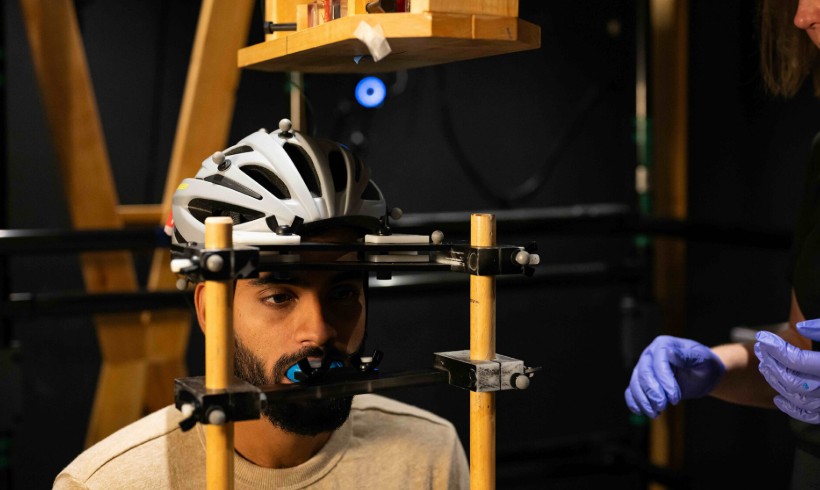
The article explains that the eyes function very differently from a camera. While cameras capture complete images, the human visual system gathers only the information needed to interact with the environment. The sharpest vision comes from a tiny region of the retina called the fovea, while the surrounding visual field provides lower resolution but is highly sensitive to motion. The brain combines these pieces into what appears to be a continuous, detailed picture of the world. Constant eye movements, including tiny motions that occur even during steady fixation, play a critical role in this process.
Researchers Michele Rucci, Duje Tadin, and Barry Silverstein approach vision from complementary perspectives. Rucci studies the active role of eye, head, and body movements in gathering visual information. Tadin investigates how the brain filters enormous amounts of sensory input, allowing people to focus on what matters while ignoring distractions. Silverstein examines how these biological processes can inform the design of immersive technologies that more closely match natural perception.
The researchers argue that many limitations of current AR and VR systems stem from an incomplete understanding of human vision rather than shortcomings in computing power alone. Even highly realistic digital environments can feel unnatural because they fail to reproduce the complex interaction between eye movements, attention, and neural processing. Future advances will require integrating neuroscience, optics, engineering, and artificial intelligence to create systems that respond to users the way the human visual system does. Such progress could improve education, medicine, manufacturing, and everyday computing while making immersive experiences more comfortable, realistic, and intuitive.
