

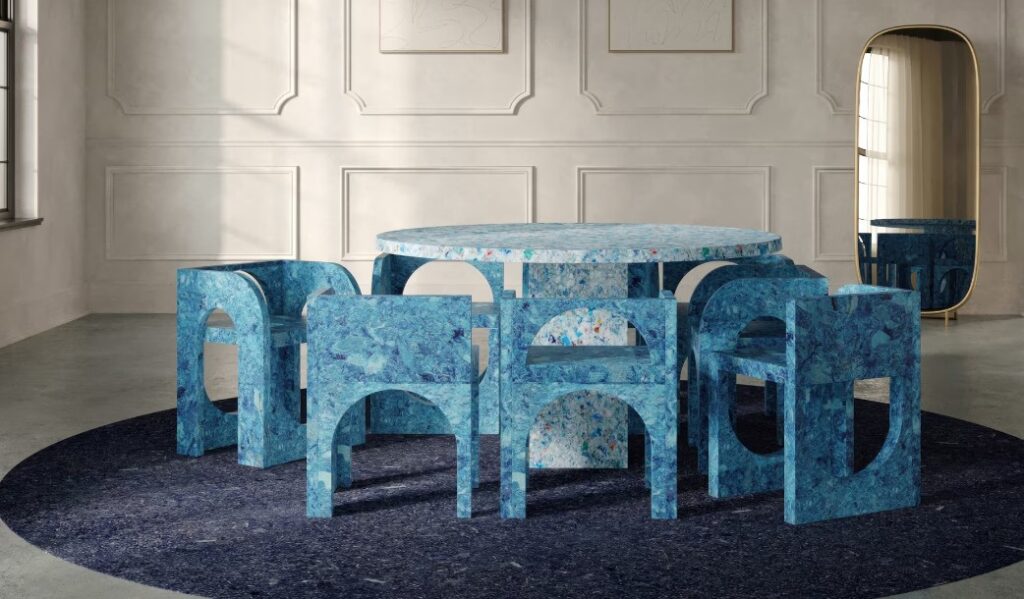
The CNN article explores how the furniture industry is undergoing a materials revolution, prompted by the need for sustainability and creative innovation. Materials once relegated to niche or experimental use are now emerging in mainstream design. One standout is mushroom mycelium: grown in molds using agricultural waste, it can form lightweight yet strong structures, ideal for chairs and tables. Designers are also using seaweed-derived fabrics, replacing traditional leather and synthetics with materials that may biodegrade more easily. Another trend: turning discarded sneakers and other post-consumer waste into furniture surfaces or upholstery, giving trash a second life in functional pieces.
The push toward circularity drives these shifts. With deforestation, plastic pollution, and textile waste mounting, manufacturers and studios are rethinking the source of materials, not just how furniture looks, but where it comes from and where it goes at the end of life. Less emphasis is now placed on exotic hardwoods or heavy metals; instead, the focus shifts toward materials that can be grown, recycled, or repurposed. Despite the creativity, challenges remain: scaling production, ensuring durability, and convincing consumers to accept unfamiliar textures or aesthetics. Performance in high-use settings, cost competitiveness, and supply-chain logistics still require work.
For the engineering-minded audience, this means material science and fabrication technology are increasingly critical in furniture design. Embedding functionality, i.e., durability, recyclability, and comfort, into novel materials elevates design beyond form. The article signals a shift: furniture is no longer just crafted from tradition, it’s engineered from ecology.
What we sit on and lean against tomorrow might come from mushrooms, seaweed, or our own cast-off shoes. And that’s not just trendy, it’s part of an infrastructure-scale rethink of how we build, and rebuild, the spaces we live in.
