

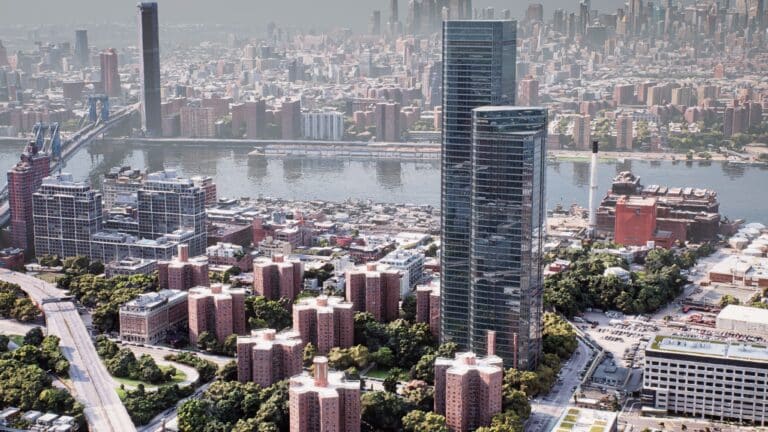
In a recent update, D5 Render has integrated Cesium’s geospatial streaming technology, opening new possibilities in architectural visualization by combining high-fidelity rendering with real-world geography. With this connection, users can stream terrain, imagery, photogrammetry, and city models directly into D5 scenes without manual alignment or heavy GIS work, tells Architosh. The result is a smoother pipeline from raw geodata to cinematic architectural storytelling.
What sets this integration apart is its scalability and precision. Users can zoom from street level to city wings, and each structure is anchored in its real location, complete with surrounding streets, topography, and neighboring buildings. No more approximating context with placeholder assets. This makes it ideal not just for homes or individual buildings, but for district planning, mixed-use zones, transit hubs, and urban design.
Practically, the tool supports deeper design communication. Stakeholders can see how shadows and daylight projections land on actual streets, assess massing or phasing plans within their real surroundings, and use visuals familiar to city residents to bridge understanding. It speeds decisions and fosters trust because visuals are grounded in context.
Under the hood, the integration uses Cesium’s open 3D Tiles standard. That means even complex datasets, i.e., city-scale photogrammetry and large terrain zones, are streamed responsively inside D5 without preprocessing or quality loss. Users authenticate via a Cesium token within D5, and from there, they can instantly stream the layers they need.
This move signals a shift in how architecture and geospatial data interact. Rather than separate tools and handoffs, D5 + Cesium offers a unified environment where context is native, not added later. It makes storytelling with scale, from a single facade detail to entire cityscapes, more accessible and visually compelling.
The integration is available now in D5 Render 2.11 for Teams. Designers can connect their Cesium accounts, pull in data, and begin embedding designs in their real city context immediately.
