

The Engineer article examines whether AI and robotics can help solve the global housing crisis by transforming one of the world’s least productive industries. Nearly 3 billion people lack adequate housing, while the global housing shortage has grown from about 201 million units in 2010 to more than 268 million in 2023. According to UN-Habitat, around 96,000 affordable homes must be built every day through 2030 to meet demand.
Construction technology companies argue that the industry’s long-standing productivity problem lies at the heart of the crisis. Unlike manufacturing, construction remains highly fragmented, with project-specific designs, disconnected trades, and limited opportunities to standardize processes or accumulate operational knowledge. This inefficiency drives up costs and slows housing delivery.
The article highlights two companies developing AI-driven construction systems. All3 combines AI-powered design software, robotic manufacturing, and an autonomous four-legged construction robot called Mantis. AI optimizes building designs for robotic production, while automated factories manufacture customized timber panels. Mantis then assembles, fastens, finishes, and inspects structures on-site. The company expects its highly automated factories to produce up to 150,000 square meters of living space annually with only about 20 employees.
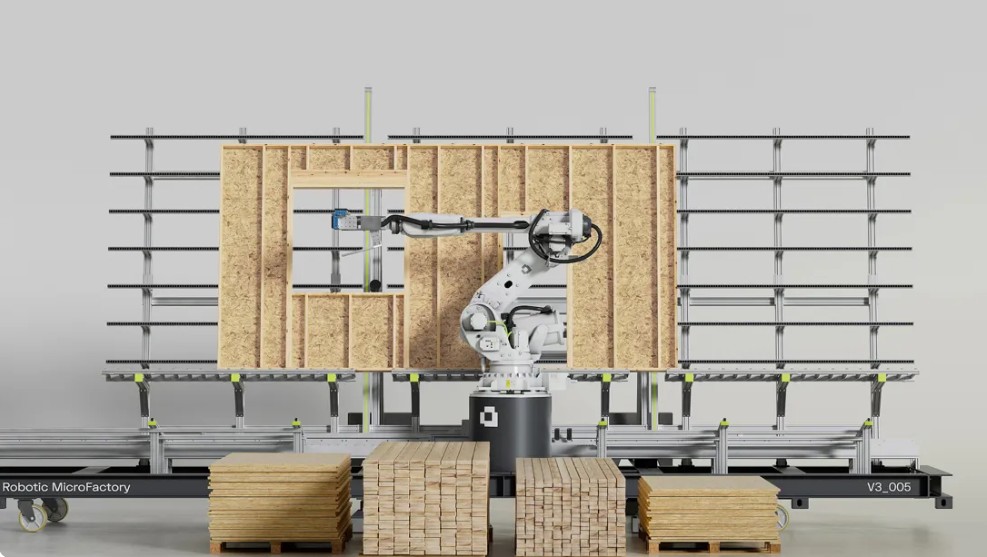
U.K. startup AUAR takes a different approach by deploying portable robotic microfactories directly to construction sites. Its AI platform, Master Builder, coordinates the entire workflow from design through manufacturing and assembly, continuously adjusting production using real-time site feedback. The containerized factories can assemble timber frames in less than 12 hours while reducing labor requirements for that stage by up to 75%. Human workers then complete the remaining construction tasks.
The article concludes that AI is becoming the key enabler of advanced construction automation, allowing companies to manage the complexity that previously made large-scale robotic building impractical. While automation alone cannot eliminate the housing shortage, it offers a practical path toward lower costs, higher productivity, and faster homebuilding. For the construction industry, embracing these technologies is increasingly becoming a matter of long-term survival rather than simply an opportunity for innovation.
