

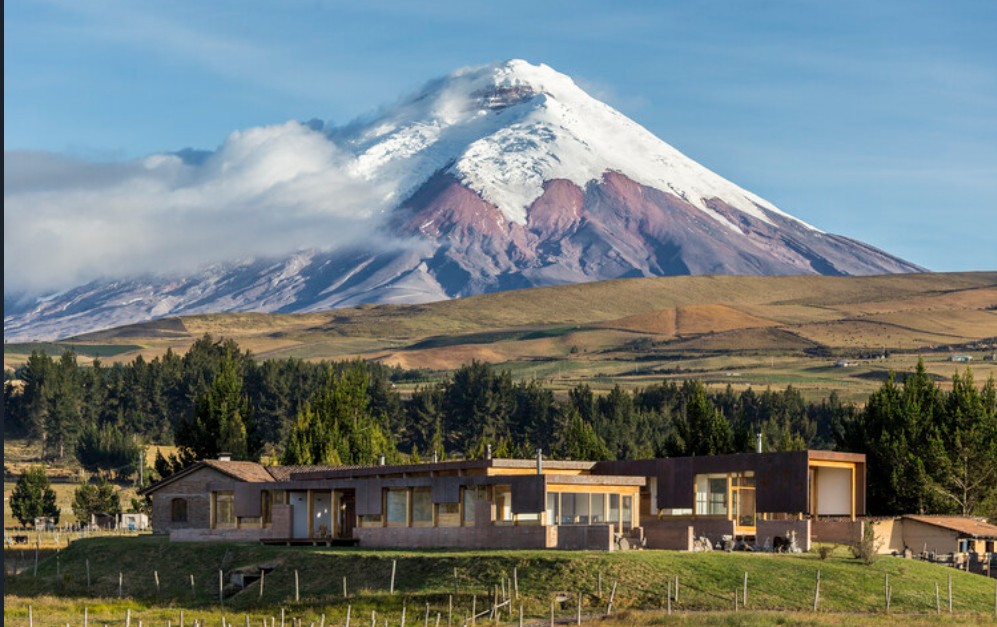
The Andes stretch across several South American countries, but they are far more than a single mountain range. Within relatively short distances, architects encounter dry highlands, humid páramos, temperate valleys, and snow-covered peaks, each presenting distinct environmental challenges. Rather than following a universal architectural style, designers must respond to changing altitude, which influences temperature, solar radiation, humidity, wind, vegetation, and topography. The result is a wide range of climate-responsive buildings that reflect local conditions rather than standardized solutions, tells Arch Daily.
One of the most significant challenges is the dramatic shift between daytime and nighttime temperatures. At high elevations, intense sunlight rapidly warms buildings during the day, but heat dissipates just as quickly after sunset. Architects address this by incorporating materials with high thermal mass, such as reinforced concrete, adobe, and stone, which absorb solar heat during the day and release it gradually at night. Projects such as Rumilahua House in Ecuador and Feliciana Cabin in Peru demonstrate how thermal mass, insulation, and carefully positioned glazing can create comfortable indoor environments without relying heavily on mechanical heating.
Solar radiation also plays a critical role in design decisions. Building orientation is carefully planned to maximize winter sunlight while reducing excessive heat during warmer months. In Chile’s Alto San Francisco House, north-facing windows capture solar warmth during winter, while the roof uses accumulated snow as a natural insulating layer. In humid regions such as Colombia’s páramos, designers must balance thermal comfort with moisture management. Elevated structures, layered insulation, and strategies that preserve natural water flows help buildings adapt to saturated ground and persistent fog.
The terrain itself further shapes architectural solutions. Steep slopes and volcanic landscapes encourage designs that work with existing landforms rather than reshape them. The Pasture House in Ecuador integrates the natural slope into its layout and extends vegetation across parts of its roof, minimizing environmental disturbance. The article concludes that successful Andean architecture begins with understanding each site’s unique environmental conditions. Instead of imposing a single design formula, architects allow climate, altitude, and landscape to guide decisions, producing buildings that are efficient, resilient, and deeply connected to their surroundings.
