

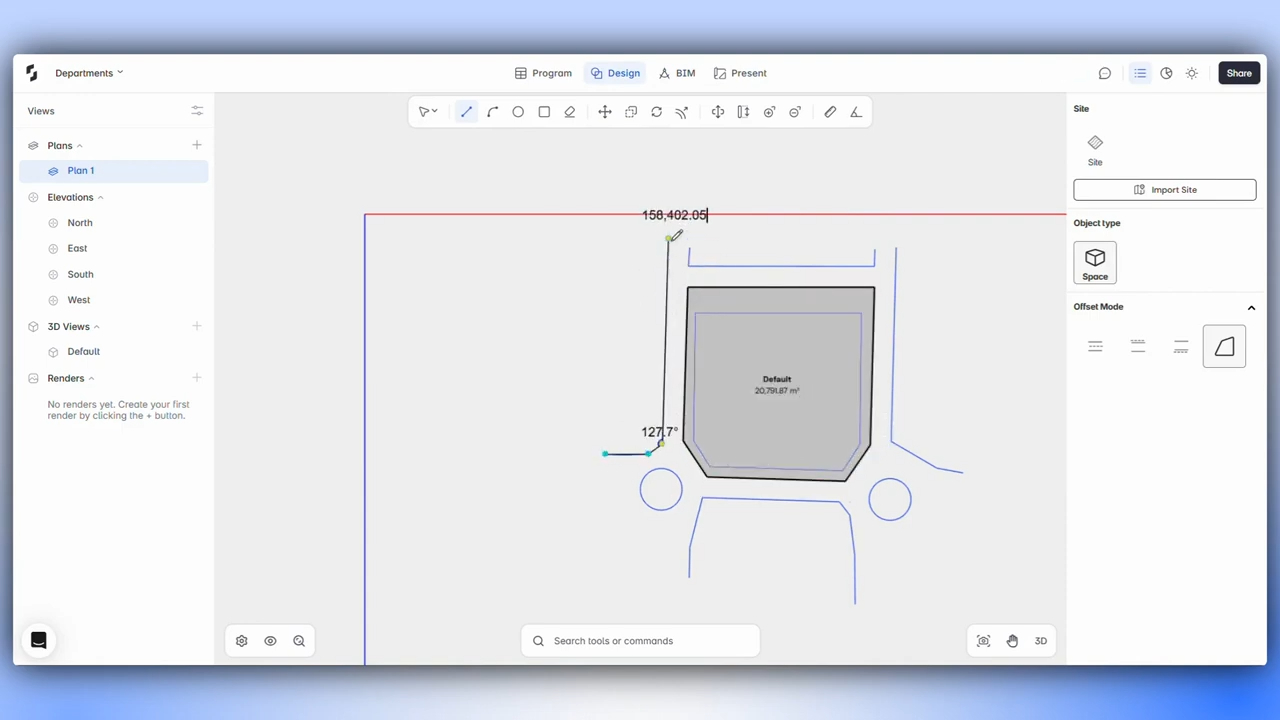
Converting CAD drawings into building information modeling (BIM) models requires more than reproducing geometry. This Snaptrude article emphasizes that successful conversion depends on whether the resulting model supports actual design, coordination, and documentation tasks. Visual similarity alone cannot establish its reliability.
The process begins with verifying the source drawing. Teams should document file revisions, units, coordinate systems, drawing scales, linked references, and conversion scope. They must also establish the intended use, whether schematic design, quantity review, coordination, or documentation, before defining acceptance criteria.
Geometry validation involves overlaying the converted model against the original drawing and checking dimensions, grids, boundaries, openings, and floor alignment. Reviewers should inspect typical conditions alongside difficult areas, including curved walls, dense cores, and repeated units. Gaps, overlaps, duplicates, and incorrect assumptions about vertical dimensions require particular attention.
Equally important is preserving BIM object intelligence. Walls must behave as walls, openings should maintain appropriate relationships, and spaces must remain properly bounded. Repeated elements should retain meaningful classifications rather than becoming disconnected geometry.
Editability provides another critical test. Designers should move walls, modify openings, update spaces, generate sections, and examine schedules to determine whether the model responds predictably. A conversion that looks correct but requires extensive reconstruction offers limited practical value.
Information quality also matters. Teams should distinguish verified source data from inferred values, design decisions, and unresolved information. Unknown properties should not be populated with unsupported assumptions.
Snaptrude recommends independently checking quantities and schedules against controlled samples. Reviewers should document exceptions, identify recurring errors, and establish procedures for updating models when source drawings change.
Before handoff, the receiving team should test the model in its intended application. Successful file opening does not guarantee interoperability or usability.
The article concludes that acceptance should be based on demonstrated performance, documented limitations, and clearly defined project requirements. A reliable conversion preserves not only geometry but also the information and functionality needed for continued BIM workflows.
