

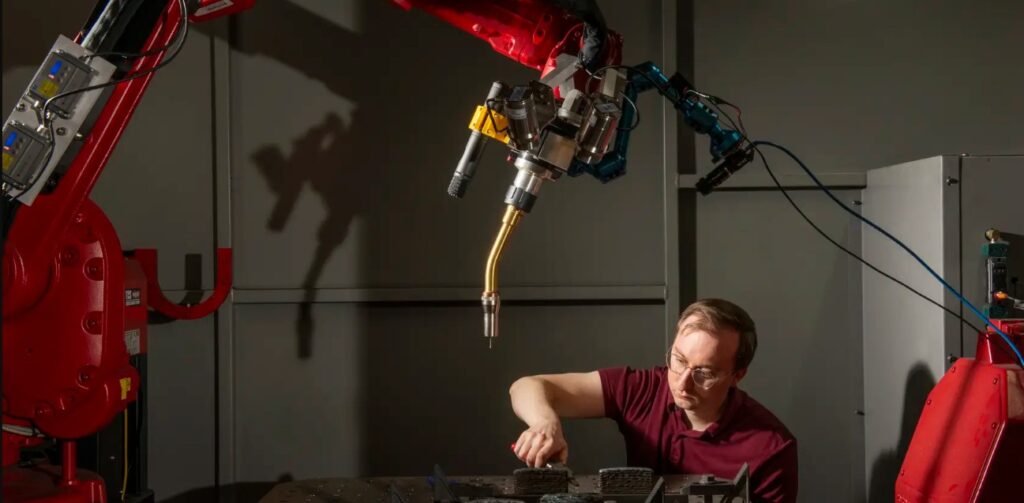
Carnegie Mellon University has built one of the world’s most influential robotics ecosystems through decades of research leadership, interdisciplinary collaboration, and strong connections with industry and government. The university’s robotics legacy stretches back more than 40 years, during which researchers developed machines capable of operating in some of the most challenging environments on Earth and beyond, from deep-sea exploration to planetary missions.
A key factor in this success has been the creation of specialized research institutions within the university. CMU’s Robotics Institute, founded in 1979, brought together experts in computer science, engineering, artificial intelligence, and machine perception. This interdisciplinary structure enabled researchers to combine advances in software, sensing, and mechanical design to produce new generations of autonomous systems. Over time, these capabilities expanded into fields such as autonomous vehicles, industrial automation, healthcare robotics, and defense technologies.
Equally important has been the close collaboration between academia, industry, and startups. CMU has cultivated partnerships that translate research into real-world applications, helping robotics companies grow around the Pittsburgh region. Faculty members, students, and alumni have launched numerous robotics ventures, creating a vibrant local innovation network that continues to attract talent and investment.
The opening of the Robotics Innovation Center (RIC) represents the latest step in expanding this ecosystem. Located at Hazelwood Green, a former industrial site being redeveloped as a technology district, the 150,000-square-foot facility provides space for researchers, industry partners, and startups to collaborate on next-generation robotics and physical AI systems. The center is designed to accelerate experimentation, testing, and commercialization of emerging technologies.
Beyond research and entrepreneurship, CMU also focuses on education and workforce development. Programs across engineering, computer science, and robotics train students to work in interdisciplinary teams and address complex real-world problems. Community outreach initiatives associated with the Robotics Innovation Center also introduce younger learners to robotics and STEM careers.
Together, these elements form a self-reinforcing ecosystem that combines research excellence, industry collaboration, and regional economic impact. The result is a robotics hub that continues to shape advances in automation and intelligent machines worldwide.
