

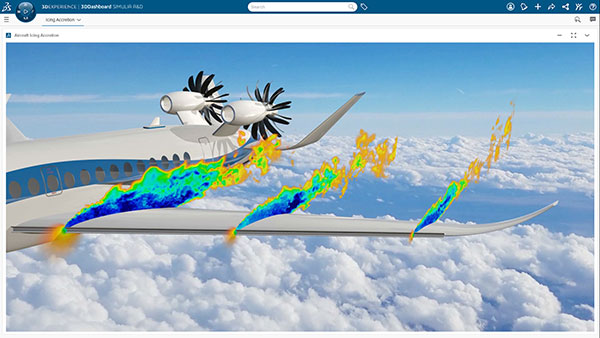
In this recent article by Digital Engineering 24/7, the focus is on how aerospace certification is changing with the broader use of digital simulation. The article highlights that authorities such as the U.S. Federal Aviation Administration (FAA) and the European Union Aviation Safety Agency (EASA) are increasingly open to simulation results as part of the evidence that aircraft designers submit to demonstrate compliance with safety requirements. This reflects a shift from traditional physical test-heavy approaches toward models that can reduce cost and development time while preserving rigor.
A key point is that there is no single preapproved finite element analysis (FEA) or computational fluid dynamics (CFD) package that regulators mandate. Instead, simulation tools are evaluated on their ability to deliver accurate representations of physical behavior relevant to a specific certification task. The implication is that engineers must not only select appropriate tools but also provide clear justification for their use, including validation against physical data and a firm understanding of model limitations.
Regulators see digital simulation as essential for certifying complex systems, especially as aircraft structures and materials become more advanced. With new platforms, including electric aircraft and additive-manufactured components, physical testing alone can be costly or impractical. Simulation helps fill these gaps, though it does not eliminate the need for empirical data. The article suggests that successful certification increasingly depends on combining both approaches.
The article also notes industry efforts, such as funding calls from America Makes aimed at improving simulation fidelity and validation methods. Collaborative research projects that improve confidence in virtual testing are expected to benefit manufacturers and regulators alike.
Overall, the trend described positions simulation as a bridge between engineering innovation and safety assurance, enabling aircraft designers to navigate rigorous certification landscapes with greater efficiency and insight.
