

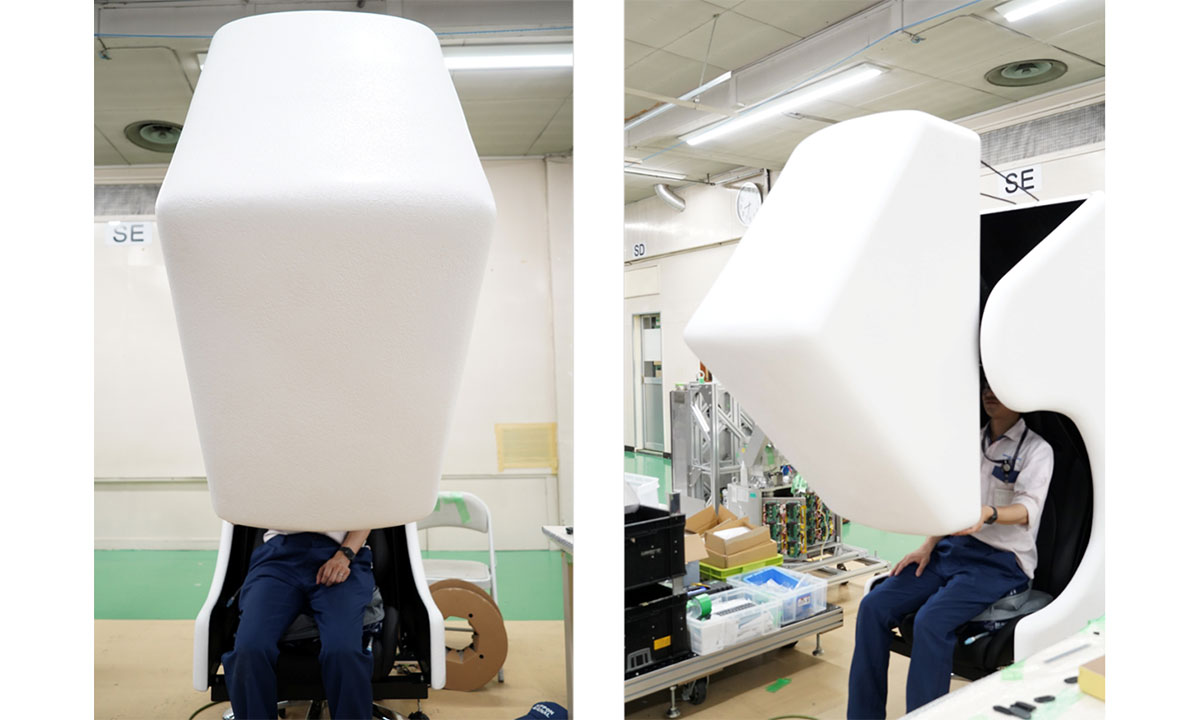
Kyushu University researchers have developed a virtual reality system that delivers an immersive 3D experience without requiring users to wear a headset. Instead, the experimental system integrates aerial imaging optics into a specially designed chair, allowing users to enter a virtual environment simply by sitting down. The research was presented at SIGGRAPH Emerging Technologies 2026.
The project addresses a persistent limitation of conventional VR headsets: comfort during extended use. Increasing resolution, field of view, and processing capabilities often requires additional hardware, adding weight and pressure to the head and neck. Rather than continuing to make headsets lighter, Associate Professor Shogo Fukushima and his team explored whether the display could be removed from the user’s head entirely.
Their system uses a micromirror array containing numerous tiny mirrors to direct different images toward each eye. Based on aerial imaging optics, the approach makes images appear to float in space while producing the slightly different views needed for stereoscopic depth. The result is an expansive, theater-like virtual scene generated within the relatively compact space surrounding the chair.
A gyroscope built into the chair tracks its rotation in real time. As users turn their bodies, the virtual view changes accordingly, letting them look around the environment without wearing equipment or calibrating. The researchers also believe the greater design freedom offered by a non-wearable system could eventually help address VR sickness by reducing conflicts between visual and physical sensations.
The team is now seeking industry partners to explore practical applications. Potential uses include in-car workspaces, interactive museum exhibits, remote-controlled construction machinery, and disaster-response robots. Fukushima ultimately envisions shared virtual environments where people can interact naturally without putting on headsets, shifting VR from a wearable device toward an immersive physical space.
