

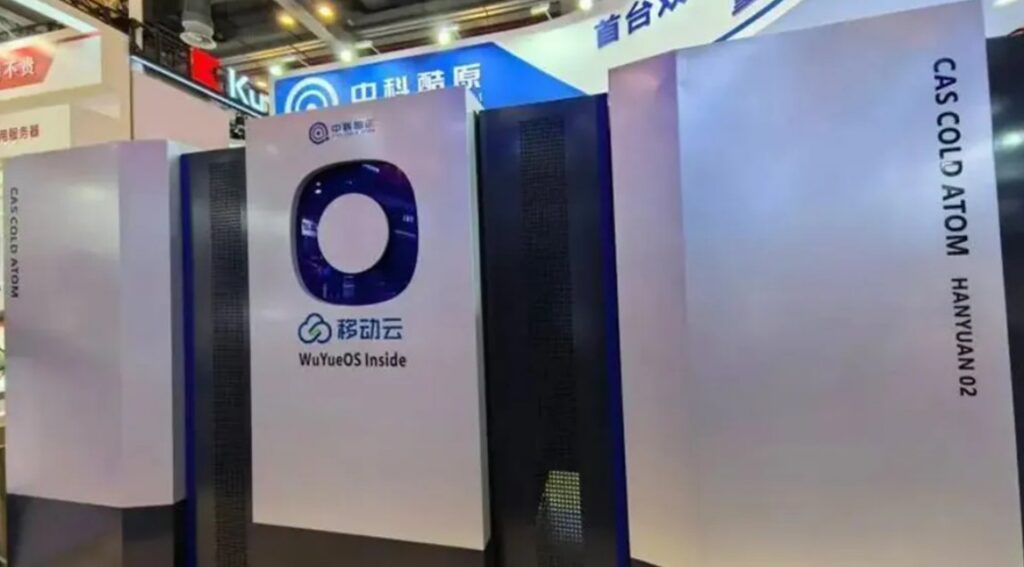
China has unveiled what researchers describe as the world’s first dual-core quantum computer, a system designed to combine the strengths of two different quantum computing architectures within a single platform. According to a report by Live Science, the new machine aims to address some of the most persistent challenges in quantum computing, including stability, efficiency, and error management.
Quantum computers process information using quantum bits, or qubits, which can exist in multiple states simultaneously. While this capability offers the potential to solve certain problems far faster than classical computers, quantum systems remain highly susceptible to noise and environmental disturbances. Maintaining qubit stability long enough to perform useful calculations is one of the field’s greatest technical hurdles.
The newly announced Chinese system tackles this issue through a dual-core design that integrates superconducting and neutral-atom quantum technologies. Superconducting qubits are known for their fast operation speeds and compatibility with existing fabrication techniques, while neutral-atom qubits offer long coherence times and strong scalability potential. By combining these approaches, researchers hope to create a platform that captures the advantages of both while minimizing their individual limitations.
According to the developers, the architecture enables more efficient quantum operations and improves overall system reliability. The dual-core framework also provides greater flexibility for running different types of quantum algorithms, potentially allowing researchers to select the most suitable processing approach for specific computational tasks. This hybrid strategy reflects a growing trend within the quantum industry, where organizations are exploring ways to combine complementary technologies rather than relying on a single qubit platform.
The announcement highlights China’s continuing investment in quantum information science, a field increasingly viewed as strategically important for computing, communications, and national competitiveness. Governments and technology companies worldwide are pursuing quantum technologies that could eventually transform areas such as materials science, cryptography, drug discovery, optimization, and artificial intelligence.
Although practical, fault-tolerant quantum computers remain years away, the dual-core system represents another step toward more capable and scalable quantum machines. By merging two leading quantum architectures into a unified platform, the project demonstrates an alternative path forward for a field still searching for the most effective route to large-scale quantum computing.
