
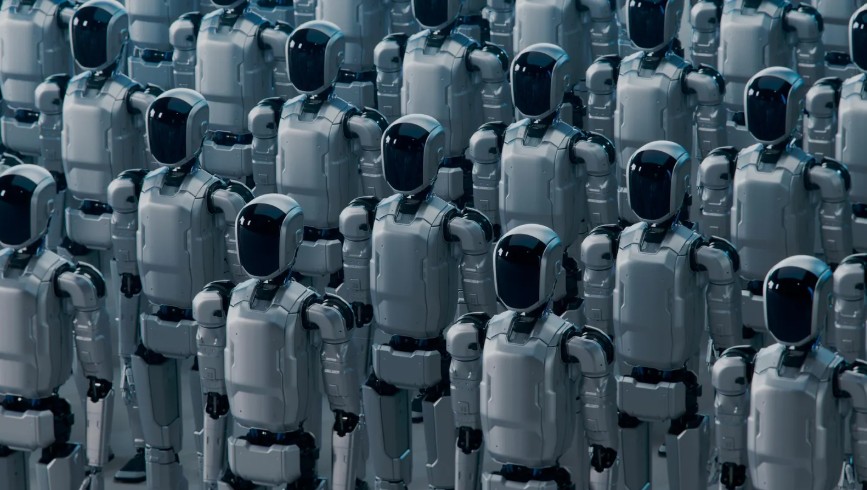
China has a commanding lead in the global capacity to build and deploy advanced robots, according to OpenMind’s Physical AI Readiness Index. The report evaluates 58 countries and 22 metropolitan clusters based on factors including robotics and actuators, software and human capital, energy, semiconductors, materials, supply chains, and demand for automation.
China ranks first with a score of 82.9, followed by Japan at 69.6 and the United States at 69.0. South Korea and Germany complete the top five. China’s 13.3-point advantage over Japan highlights the scale of its manufacturing ecosystem, tells Forbes.com.
The United States presents a contrasting picture. It leads in computing, scoring 91.6, and human capital, at 78.7, but receives only 48.5 for materials and supply chains, compared with China’s 95. This gap suggests that leadership in artificial intelligence alone may not determine success in physical AI.
Manufacturing a humanoid robot illustrates the problem. OpenMind estimates that a robot costing about $46,000 with access to Chinese suppliers could cost approximately $131,000 without them. Actuators account for 40–60% of a humanoid robot’s bill of materials, while semiconductors represent about 10%.
Critical components include precision bearings, torque motors, reducers, roller screws, and rare-earth magnets. China produces 94% of the world’s sintered neodymium permanent magnets and handles 91% of global rare-earth refining, making magnets a particularly important supply-chain constraint.
Geographic concentration provides another advantage. Eight of the world’s top 10 robot-building metropolitan clusters are in East Asia. Shenzhen-Dongguan-Guangzhou ranks first, followed by Shanghai-Suzhou-Hangzhou.
The findings indicate that the advanced robotics race will depend on more than AI models. Countries also need dense supplier networks, specialized manufacturing capabilities, materials, components, energy, and the ability to rapidly turn robotic designs into commercially viable machines.
