

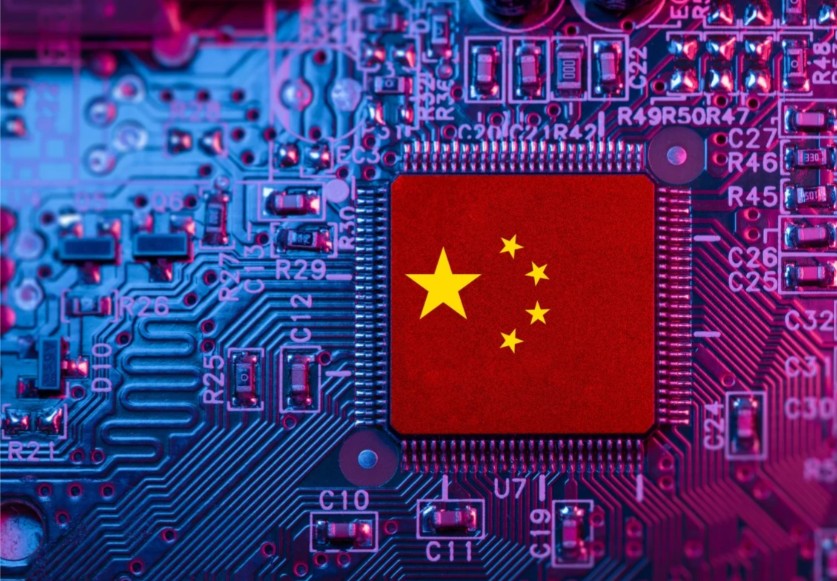
Chinese artificial intelligence models have rapidly narrowed the performance gap with leading U.S. systems, but the country’s hardware ecosystem remains a work in progress. While domestic processors are increasingly used for AI inference, the most computationally demanding stages of model development have historically relied on foreign hardware. That situation is beginning to change as Chinese AI developers experiment with training advanced models on homegrown chips, tells this South China Morning Post article.
AI development generally involves three stages: pre-training, where a model learns from vast datasets; post-training, which fine-tunes behavior and instruction-following capabilities; and inference, the process of generating responses to user queries. Of these, pre-training requires the greatest computing power and has traditionally depended on Nvidia’s GPUs.
Driven by U.S. export controls and China’s push for technological self-reliance, several Chinese companies and research institutions are demonstrating that domestic hardware can support increasingly sophisticated AI workloads. Beijing-based Zhipu AI partnered with Huawei Technologies to develop GLM-Image, an image-generation model trained entirely on Huawei Ascend processors and the MindSpore framework. The company described it as the first state-of-the-art multimodal model trained completely on domestic chips.
Meituan reported that both training and inference for its trillion-parameter LongCat-2.0-Preview model were conducted on a domestic computing cluster comprising tens of thousands of local chips. Meanwhile, start-up ModelBest used Huawei Ascend hardware to train its BitCPM-CANN and MiniCPM5-1B models, demonstrating that domestic processors can support more than inference workloads.
Huawei researchers also completed full-parameter post-training of the massive 1.6-trillion-parameter DeepSeek-V4-Pro model using Ascend 910C chips. In academia, Peking University trained its EvoPhys-World simulation model on Moore Threads’ MTT S5000 GPU and Musa software platform, achieving leading performance on Stanford University’s WorldScore benchmark.
Although domestic chips still trail Nvidia in ecosystem maturity and overall capability, these projects highlight China’s growing ability to build an end-to-end AI supply chain. The progress suggests that local hardware is becoming a credible foundation for future AI innovation, reducing dependence on foreign technologies while strengthening China’s long-term technological resilience.
