

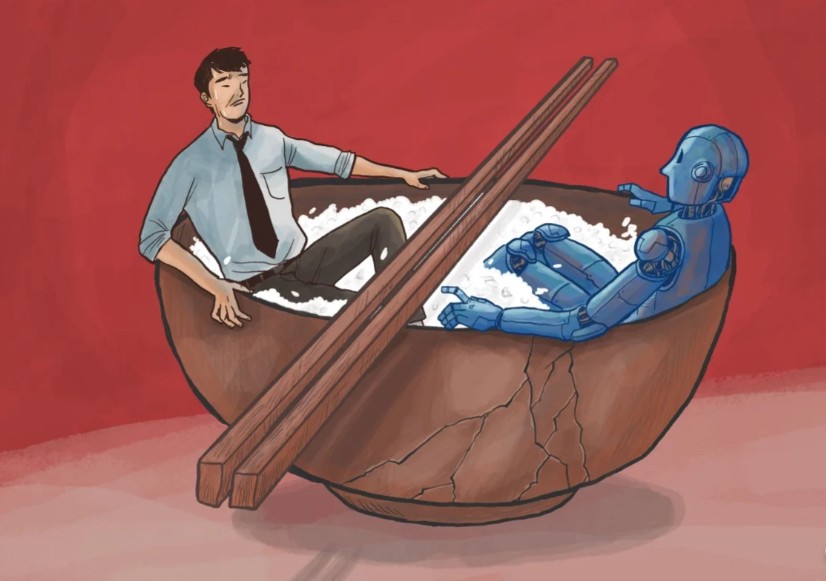
China’s technology sector is entering a new phase of artificial intelligence adoption, and many office workers are beginning to fear that the same tools meant to improve productivity could make their jobs expendable. The South China Morning Post article examines a growing sense of insecurity across the industry, where employees are no longer worried only about conventional layoffs but also about whether artificial intelligence can take over their roles.
The concern became especially visible at Meituan, the food delivery giant, after social media posts suggested that the company might cut a large share of its product staff. Meituan denied the reports, but the rumor resonated because workers across China’s tech sector have already become familiar with the language of corporate optimization. For years, the term youhua has been used as a softer way to describe restructuring and job cuts. In the AI era, however, it increasingly implies something more unsettling: a workforce being reduced because software can perform parts of the job faster and more cheaply.
The article places Meituan within a broader trend affecting companies such as Baidu and Xiaomi, where teams are being trimmed while firms invest heavily in AI tools, automation, and agent-based systems. These systems are designed to handle tasks that once required teams of product managers, software engineers, customer-service staff, analysts, and operations specialists. For employers, the appeal is obvious. AI can process information quickly, generate reports, assist with coding, analyze user behavior, and automate repetitive office work. For workers, the shift raises difficult questions about job security, career progression, and the value of human expertise.
The anxiety is not simply about machines replacing people overnight. It is also about companies using AI as a reason to demand more output from smaller teams. Employees may keep their jobs, but with fewer colleagues, broader responsibilities, and stronger pressure to prove that they can work alongside AI rather than be replaced by it.
The article suggests that China’s tech industry is moving toward a more competitive and leaner operating model, one shaped by AI investment, slowing growth, and pressure to control costs. For workers, the message is clear: technical skills alone may no longer be enough. Adaptability, judgment, creativity, and the ability to supervise AI systems are becoming central to staying valuable in the workplace.
