

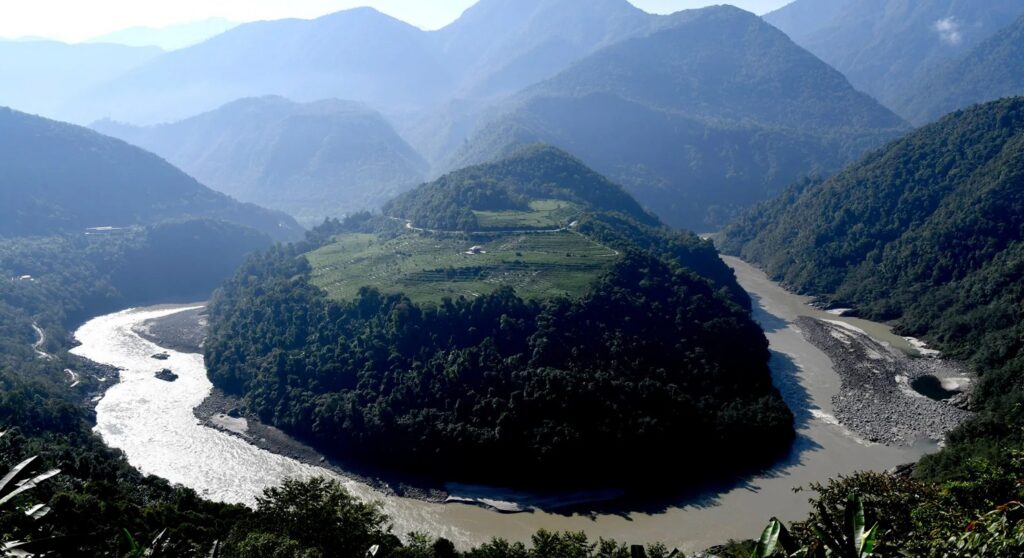
China is moving forward with plans to build what could become the world’s largest hydroelectric dam on the Yarlung Tsangpo River in Tibet, a project that promises enormous energy output but has sparked concerns among geologists, environmental scientists, and neighboring countries. The Live Science article examines the engineering ambitions behind the project and the significant challenges posed by its location in one of the most geologically active regions on Earth.
The proposed dam would harness the tremendous energy potential of the Yarlung Tsangpo Grand Canyon, where the river descends sharply through the Himalayas before flowing into India as the Brahmaputra River. The dramatic elevation change gives the site immense hydropower potential, potentially surpassing the generating capacity of China’s massive Three Gorges Dam.
However, the project sits within a region shaped by the ongoing collision of the Indian and Eurasian tectonic plates. This process created the Himalayas and continues to generate frequent earthquakes. Experts interviewed in the article note that the area’s seismic activity presents substantial engineering and safety challenges. While modern dams can be designed to withstand significant earthquakes, the scale of the proposed structure and the geological complexity of the region raise questions about long-term resilience.
Beyond seismic concerns, scientists warn that large-scale river modification could alter ecosystems, sediment transport, and water availability downstream. Because the river eventually flows into India and Bangladesh, the project also carries geopolitical implications. Neighboring countries have expressed concerns about potential impacts on water resources and regional environmental stability.
Supporters argue that the dam could provide a major source of renewable electricity and help China meet its energy and climate goals. Critics, however, caution that controlling such a powerful river system in a fragile mountain environment carries significant risks.
The article portrays the project as one of the most ambitious engineering undertakings of the century, highlighting the tension between humanity’s desire to harness natural forces and the challenges posed by the dynamic geological systems that shape the planet.
