

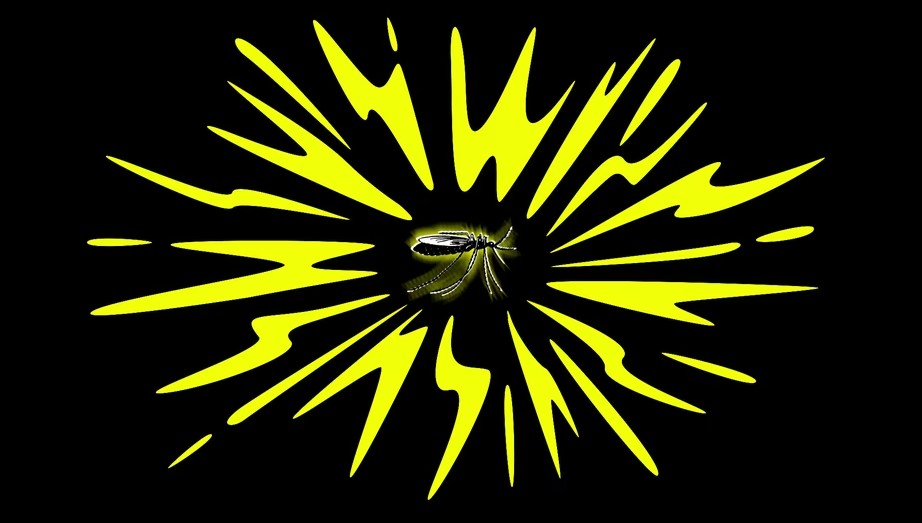
Laser systems designed to kill mosquitoes in midair are once again drawing attention, this time through a wave of Chinese experiments and online fascination highlighted in a recent Atlantic article. Although the technology appears futuristic, its roots stretch back years to earlier work led by Lowell Wood, whose ambitious mosquito-defense concepts helped establish the foundation for today’s renewed interest in automated insect targeting.
The article explains that modern mosquito laser systems use cameras, optical sensors, and software capable of identifying insects based on wingbeat frequency and flight behavior. Once a mosquito is recognized, a low-energy laser pulse can disable or eliminate it midflight. Developers present the systems as a possible alternative to chemical pesticides and traditional repellents.
The broader idea became widely known during the late 2000s when Lowell Wood and researchers connected to Intellectual Ventures began developing laser mosquito-tracking systems aimed at reducing the spread of malaria. Their work combined high-speed imaging, acoustic identification, and laser targeting technologies to selectively attack disease-carrying insects while avoiding harmless species. Though the concept attracted enormous public curiosity, technical and economic hurdles limited large-scale deployment.
The Atlantic article suggests that China’s current experiments arrive in a very different technological environment. Advances in artificial intelligence, low-cost sensors, computer vision, and miniaturized electronics have made precision tracking systems cheaper and more accessible than they were during Wood’s earlier efforts. Online demonstrations of mosquito-targeting lasers have therefore become part engineering showcase and part social-media spectacle.
At the same time, practical questions remain unresolved. Mosquitoes are difficult targets due to their size, erratic movement, and sheer numbers. Environmental conditions, power requirements, and safety concerns complicate real-world deployment. The article also raises broader questions about society’s growing faith in automated technological solutions for everyday problems.
Rather than portraying mosquito lasers as a near-finished consumer product, the article frames them as a revealing example of technological ambition. The systems reflect a blend of scientific ingenuity, commercial experimentation, and cultural fascination with precision automation, while also showing how older visionary concepts can reemerge when surrounding technologies finally begin to catch up.
