

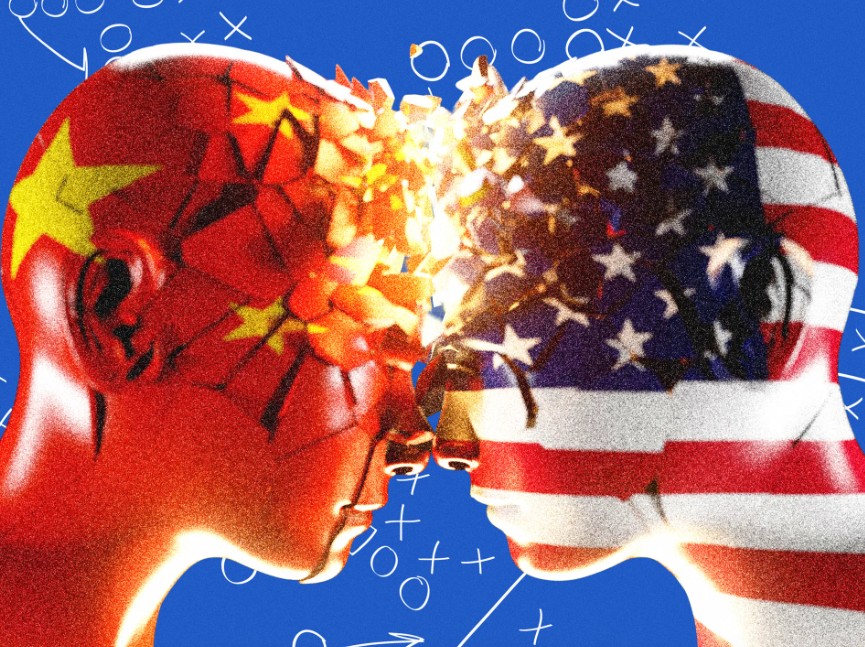
China’s leading AI companies are reshaping the competitive landscape by embracing open weight models while many of their American rivals continue to restrict access to their most advanced systems. According to Wired.com (full article available to subscribers), recent releases such as Moonshot AI’s Kimi K3, Z.ai’s GLM 5.2, and Alibaba’s Qwen 3.8 have demonstrated that open models can approach the capabilities of top proprietary systems from OpenAI and Anthropic. Their strong performance, particularly in agentic coding tasks, has intensified debate over whether the future of AI will be defined by openness or exclusivity.
The contrast reflects two increasingly different business strategies. U.S. companies have invested billions of dollars to build frontier models while limiting access because of safety concerns, commercial interests, and government regulations. Anthropic temporarily restricted access to its Mythos and Fable models following new U.S. export controls, and OpenAI delayed the release of GPT-5.6 after discussions with the White House. Chinese companies, meanwhile, have continued to release open weight models that developers can download, modify, and run locally, giving users greater flexibility and control.
Chinese firms see openness as both a technical and commercial advantage. As newer entrants competing against well-funded American companies, they are using freely available models to attract developers, researchers, and enterprise customers. Alibaba recently reaffirmed its commitment to open source by announcing that the latest version of Qwen would also be released with open weights, signaling that it intends to continue expanding its developer ecosystem rather than moving toward a closed model.
Performance is reinforcing that strategy. Independent benchmarks rank Kimi K3 among the world’s strongest AI models, particularly for web development and autonomous coding tasks. Researchers and startups in the United States have begun incorporating Chinese models into their workflows, citing their accessibility and competitive capabilities. Even though some of these models consume more tokens than their Western counterparts, reducing their apparent cost advantage, many users view them as practical alternatives to expensive proprietary systems.
The growing popularity of China’s open AI models is also challenging a long-standing assumption in Silicon Valley that only companies with enormous computing budgets can build frontier AI. As high-performing open models gain wider adoption, they are putting pressure on the closed-source approach that has dominated the U.S. AI industry. The result is not only a more competitive global AI market but also a broader debate over innovation, accessibility, national security, and the business models that will shape the next generation of artificial intelligence.
