

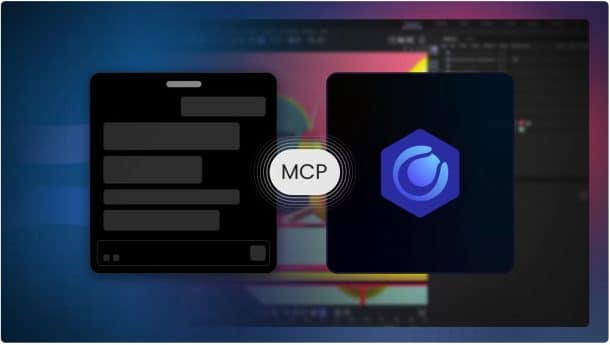
Maxon has introduced a built-in Model Context Protocol server for Cinema 4D, giving artists a way to connect AI assistants directly to their 3D workflows. Part of a broader MCP rollout across the Nemetschek Group, the technology supports Claude, ChatGPT, and Codex and is intended to automate technical and repetitive tasks while leaving creative decisions with artists, tells Architosh.
Users can issue natural-language instructions through an AI assistant, which then performs approved actions using Cinema 4D’s API. The work occurs directly within the artist’s scene and produces native Cinema 4D data rather than flattened AI-generated output. Artists can therefore inspect, modify, refine, or undo the results using their normal workflow.
The MCP implementation targets procedural, iterative, and repetitive operations common in 3D production. AI assistants can organize large numbers of imported objects into consistent hierarchies, create object and material variations, prepare multipass renders, and organize scenes. The system can also assist with basic camera tracking, UV mapping, rigging, and animation.
Maxon has placed significant emphasis on security and user control. The MCP server runs locally and is disabled by default. Users decide which groups of Cinema 4D tools an AI assistant can access and can separately control Python execution. Connecting to other machines on a network requires an additional opt-in, while an MCP adapter access token protects server access.
Visibility is another safeguard. AI actions pass through Cinema 4D’s API, appear in the application’s Undo history, and are recorded in a local audit log. These controls could help studios evaluate AI automation against existing security and production policies.
The Cinema 4D MCP server is available in Cinema 4D 2026.4 or later for Windows and macOS and requires no additional installation. The approach positions AI as an automation layer inside an established creative application rather than as a replacement for artists, allowing users to delegate routine work while preserving direct control over scenes and creative intent.
