

Structural engineers spend a significant amount of time converting architectural designs into computer models before they can begin analyzing a building’s performance. This process often requires manually defining beams, columns, supports, loads, and other structural elements, making it repetitive and time-consuming. Researchers at the University of Miami have developed an artificial intelligence-powered tool called CivilBot to streamline this workflow. By automatically generating the code needed for structural analysis models, the software can reduce a task that traditionally takes days to just a few hours, allowing engineers to focus more on design decisions than model creation, tells Tech Xplore.
CivilBot works through natural language input. Engineers describe a structure’s characteristics, including beam lengths, support conditions, and loading information, and the AI generates code compatible with widely used structural analysis software such as SAP2000. Rather than replacing engineering judgment, the tool automates the repetitive coding and modeling steps required before structural analysis begins. According to the developers, this significantly reduces the number of manual operations involved in preparing a project while maintaining compatibility with existing engineering workflows.
The software was developed by Minghui Cheng, assistant professor of civil and architectural engineering at the University of Miami, in collaboration with graduate student Ziheng Geng, Ran Cao of Hunan University, Lu Cheng of the University of Illinois Chicago, and former graduate student Jiachen Liu. CivilBot has already progressed to its third version. While the initial releases focused on two-dimensional structural models, the research team is now expanding the platform to support three-dimensional building models, increasing its usefulness for more complex engineering projects.
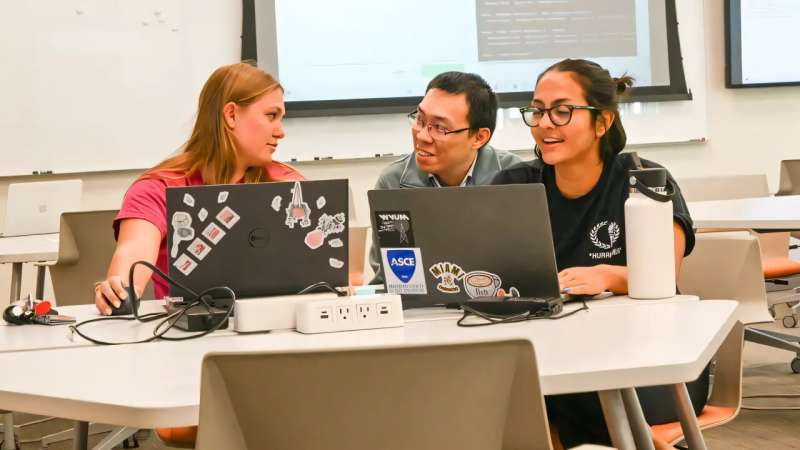
University of Miami engineering students have already incorporated CivilBot into their senior capstone projects, reporting that it enabled them to generate structural models 20–30 times faster than traditional manual methods. Faculty members believe experience with AI-assisted tools will better prepare graduates for a profession that is increasingly embracing digital design technologies. Looking ahead, the researchers hope practicing engineers will adopt CivilBot, provide feedback, and help refine the platform into a practical industry tool that accelerates structural design without compromising engineering oversight.
