

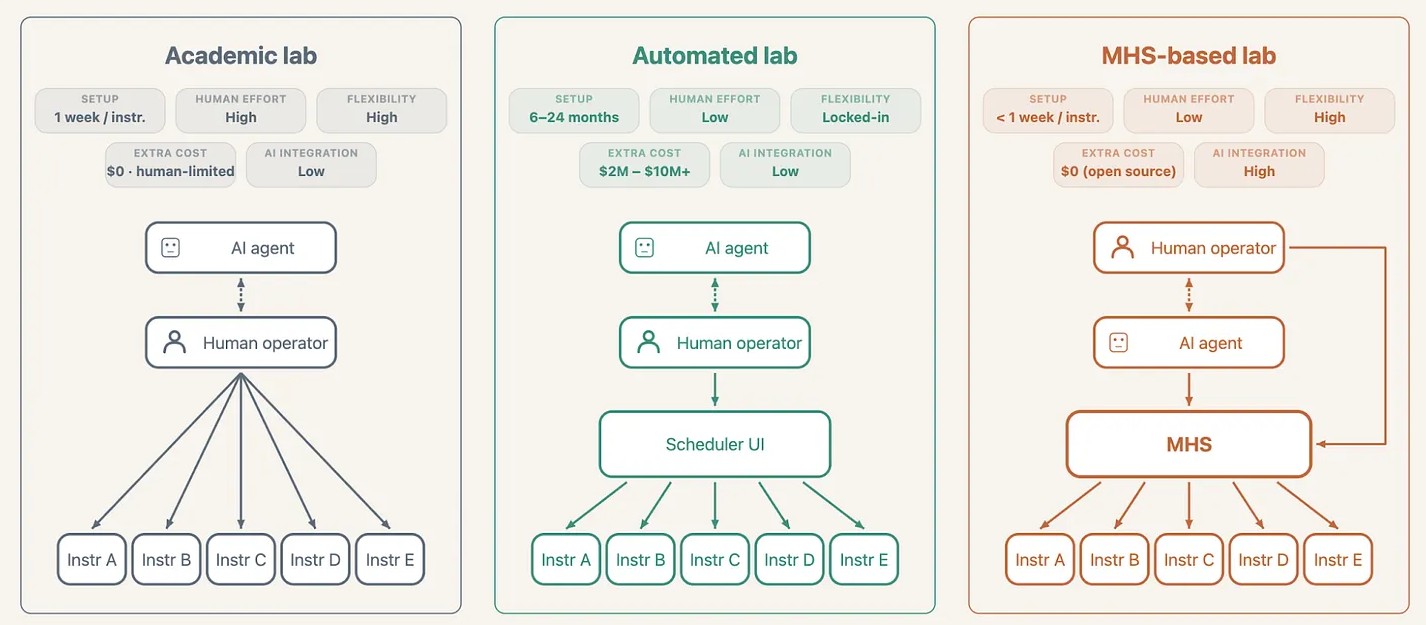
Manufacturing involves more than building a product. Companies must also create testing systems that determine whether each unit has been assembled and calibrated correctly. Hardware FYI examines how Anthropic’s Model Hardware Standard, or MHS, could make that second part of manufacturing easier by standardizing communication between computers and physical equipment.
Factory test stations often combine instruments from multiple vendors, each with its own software development kit, drivers, firmware interfaces, and communication protocols. Engineers may spend weeks or months integrating these devices and writing custom software before a testing system becomes operational.
MHS proposes a common software layer for connecting hardware to computers. Instead of requiring a separate translator for every device, the standard uses basic operations such as reading and writing while describing connected equipment in a consistent, discoverable format. Claude Code can then help create the translation layer between hardware and software.
The approach could reduce the specialized programming required to build and maintain factory test infrastructure. Engineers would not necessarily need detailed knowledge of every vendor SDK or have to manually develop each device driver. This could give manufacturing teams greater control over their testing software while making it easier to add or replace equipment.
Hardware FYI connects the idea with Martin Ling’s work on open-hardware factory testing. Ling uses GreatFET to move hardware control into Python, reducing the need for additional protocols between test software and equipment.
The scale of factory testing shows why standardization matters. Skydio reportedly performs more than 300 automated tests across its products, while Formlabs uses a 60-point calibration and quality-control process for every printer. As manufacturing systems become increasingly automated, standardized interfaces combined with AI could make sophisticated test infrastructure easier to build, modify, and manage.
