

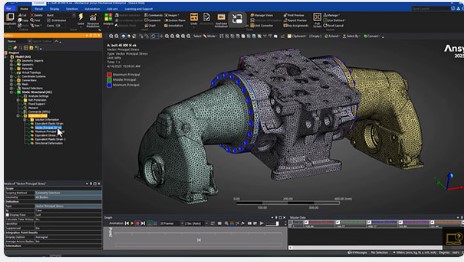
Cloud-based engineering is rapidly moving from an emerging concept to a mainstream approach across design and manufacturing workflows. Instead of relying on local hardware and installed software, engineers are increasingly turning to cloud platforms for CAD, simulation, product lifecycle management (PLM), and data management. This shift is redefining how teams collaborate, compute, and deliver products, tells Digital Engineering 24/7.
One of the primary drivers is accessibility. Cloud-based tools allow engineers to work from anywhere, enabling distributed teams to collaborate in real time. Design files, simulations, and project data can be accessed through web interfaces, removing the need for powerful local machines and simplifying IT infrastructure. This flexibility has become especially valuable as remote and hybrid work models continue to expand.
Scalability is another major advantage. Engineering tasks such as simulation and rendering often require significant computing power. Cloud platforms provide on-demand resources, allowing users to scale up processing capacity when needed and scale down afterward, optimizing both performance and cost. This eliminates the need for expensive, underutilized hardware investments.
The transition also supports faster iteration cycles. With centralized data and integrated tools, teams can move more quickly from concept to testing and refinement. Updates are synchronized instantly, reducing version conflicts and improving efficiency across the development process.
However, challenges remain. Concerns about data security, intellectual property protection, and system reliability continue to shape adoption decisions. Companies must also adapt their workflows and retrain teams to fully leverage cloud-native tools, rather than simply replicating traditional processes in a new environment.
The broader trend reflects a shift toward more connected and flexible engineering ecosystems. As cloud platforms mature, they are expected to integrate more advanced capabilities, including artificial intelligence and real-time analytics, further enhancing design and decision-making processes.
Cloud-based engineering is not just a technological upgrade but a structural change in how engineering work is organized. By enabling collaboration, scalability, and speed, it is setting the foundation for a more agile and distributed future in product development.
