

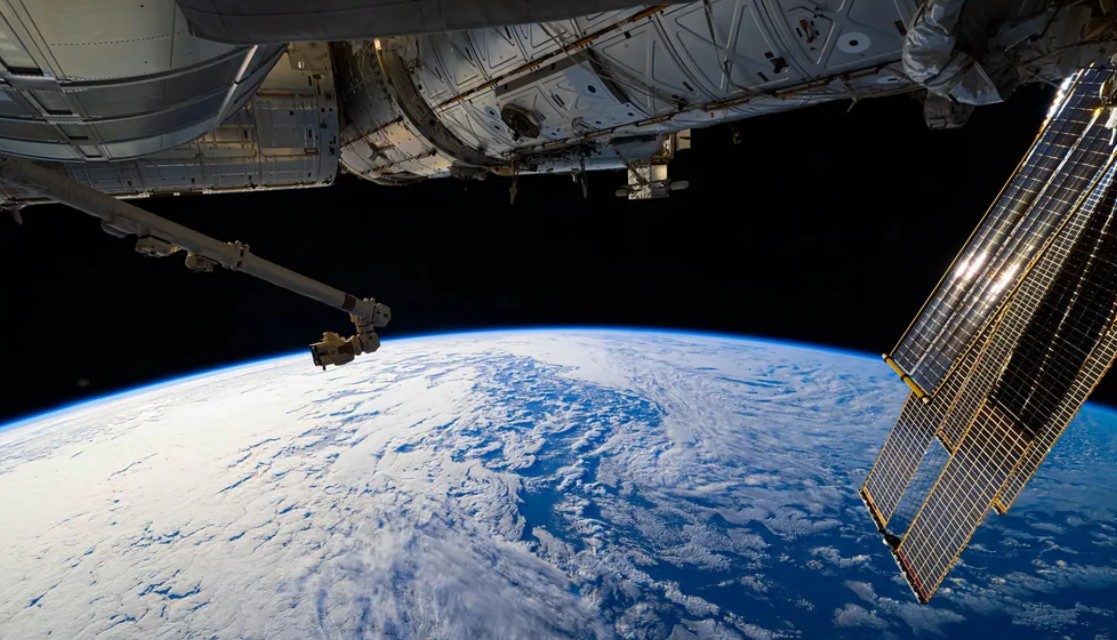
On Earth, pressing two pieces of metal together rarely produces any noticeable effect. In the vacuum of space, however, those same pieces can permanently fuse into a single object through a process known as cold welding. Rather than requiring high temperatures or molten metal, cold welding occurs because of the unique environment beyond Earth’s atmosphere, where oxygen is almost entirely absent, tells Live Science.
The article explains that metals are made of atomic lattices whose surface atoms contain unsatisfied chemical bonds. On Earth, these atoms are quickly covered by an extremely thin oxide layer formed when the metal reacts with oxygen in the air. This invisible coating prevents neighboring metal surfaces from sharing electrons. In space, once that protective layer is removed, nothing replaces it. Surface atoms from two clean metal objects can exchange electrons, causing the separate pieces to bond as though they had always been part of the same structure.
The risk increases because metal surfaces are not perfectly smooth. Under a microscope, they resemble rugged landscapes filled with peaks and valleys. Pressure, vibration, or sliding motion can scrape away remaining oxide layers and expose fresh metal. Solar radiation and the harsh conditions of space further strip surfaces, making accidental bonding even more likely. Metals such as gold and platinum are especially vulnerable because they do not naturally form protective oxide layers.
Cold welding has concerned spacecraft engineers for decades because it can immobilize moving parts. The article cites NASA’s Galileo spacecraft, whose high-gain antenna failed to deploy fully after launch, with cold welding considered a major contributing factor. To reduce the risk, engineers anodize metal surfaces, apply dry lubricants such as molybdenum disulfide, combine dissimilar metals that resist bonding, and rigorously test spacecraft hardware in vibration tables and vacuum chambers before launch.
Although cold welding can occasionally occur in laboratory vacuum systems on Earth, it is far more common in space. Understanding the phenomenon allows engineers to design spacecraft that remain reliable despite the unusual atomic behavior created by the vacuum of space.
