

The rapid expansion of semiconductor manufacturing in the United States is creating a workforce problem that community colleges are increasingly being asked to solve. By 2030, investments in chip manufacturing, design, materials, and packaging are expected to generate demand for 189,000 new full-time workers. The available workforce, however, is projected to supply only about 62,000, tells IEEE Spectrum.
Engineers account for about 60% of the unmet demand, but semiconductor companies also need thousands of technicians to operate equipment, perform quality control, maintain machines, and manage facilities. Many of these positions require an associate degree or a high school diploma combined with specialized training, making community colleges an important pathway into the industry.
The need has intensified following the 2022 CHIPS and Science Act. Companies have announced 140 U.S. semiconductor projects representing more than $640 billion in investment. TSMC alone plans to invest $165 billion in the United States, while its expanding Arizona operations will require thousands of technicians.
Community colleges are responding with programs developed alongside semiconductor manufacturers. Maricopa Community Colleges works with TSMC, Intel, and other companies to shape curricula around actual workforce requirements. Its 10-day Quick Start program teaches skills including schematic reading, hand-tool use, and vacuum technology. About 1,500 people have completed the program, with thousands more on its waiting list.
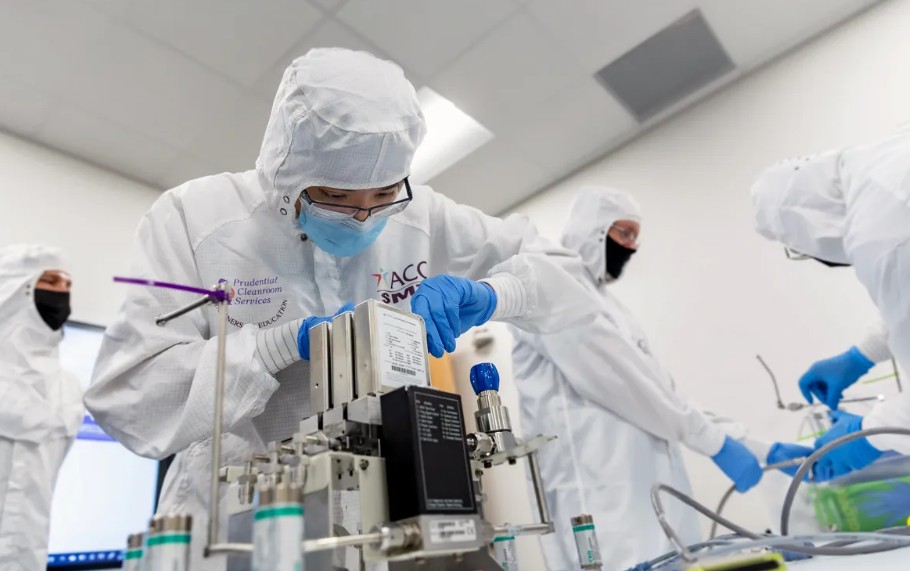
Other colleges emphasize practical exposure. Austin Community College puts students in clean-room suits and uses virtual reality to simulate semiconductor environments. West Valley College offers a 15-week program covering equipment and troubleshooting, with students building a transistor at Stanford’s Nanofabrication Facility.
These programs also attract career changers and people who might not pursue four-year engineering degrees. Still, community colleges alone are unlikely to eliminate the projected shortage. The article shows that expanding U.S. semiconductor manufacturing depends not only on building fabs but also on creating accessible, industry-aligned pathways that can supply the skilled people required to operate them.
