

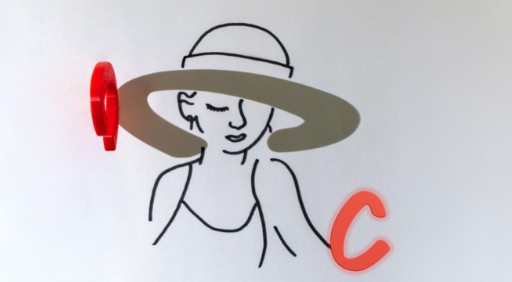
Researchers at Cornell University have developed a computational framework that can generate intricate shadow art from scanned physical objects, blending computer graphics, fabrication, and artistic expression. The system enables designers to transform ordinary three-dimensional objects into customized forms that cast recognizable images when illuminated from specific angles.
The research addresses a longstanding challenge in shadow art: creating objects whose geometry produces a desired shadow while remaining structurally coherent and visually meaningful as physical artifacts. Traditional shadow sculptures are often designed through labor-intensive manual processes that require extensive experimentation. The Cornell team sought to automate this process using computational methods.
The framework begins with a digital scan of an existing object. Researchers then specify a target shadow image that they want the object to project. Using optimization algorithms, the system modifies the object’s geometry while preserving its overall appearance and structural integrity. The resulting design can be fabricated with a 3D printer and, when illuminated, produces the intended shadow image.
A key innovation is the system’s ability to balance competing requirements. The object must maintain a recognizable three-dimensional form while simultaneously encoding information needed to generate the target shadow. The framework calculates subtle geometric adjustments that are often nearly imperceptible when viewing the object directly but become apparent through the projected shadow.
The project demonstrates the growing role of computational design tools in expanding creative possibilities. Rather than treating fabrication and artistic design as separate disciplines, the framework integrates scanning, geometry processing, optimization, and additive manufacturing into a unified workflow. This allows designers to explore forms that would be difficult or impossible to create manually.
Beyond artistic applications, the researchers believe the approach could have implications for manufacturing, product design, security features, educational tools, and customized visual communication. The work illustrates how advances in computer graphics and digital fabrication can transform physical objects into information-rich artifacts capable of conveying multiple layers of meaning.
By combining computational geometry with 3D printing, the Cornell team has created a method that turns ordinary objects into dynamic visual experiences, revealing hidden images that emerge only when light and shadow interact in precisely engineered ways.
