

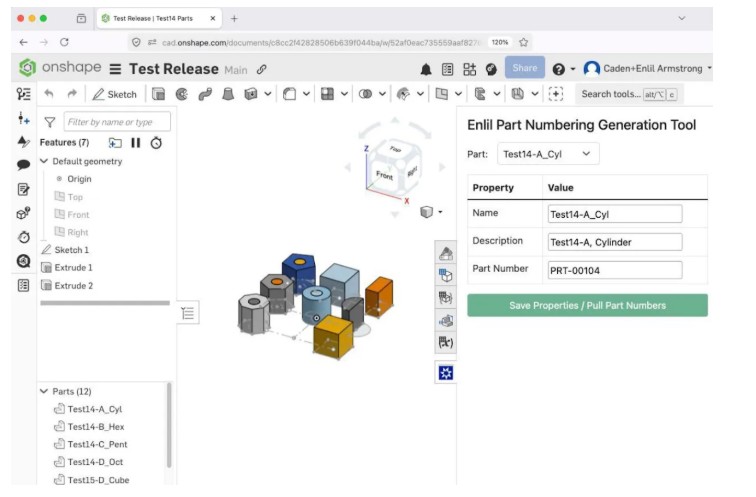
In this CAD integration with Enlil, an Enlil part number is generated for a design/project part from within PTC Onshape (source: Enlil).
Medical device companies generate enormous amounts of engineering data throughout product development. This information is often distributed across multiple systems, including CAD, PLM, QMS, ERP, requirements management, procurement, supplier management, and communication platforms. According to Chiratana Pot, senior director of product management at Enlil, the challenge is not simply collecting data but maintaining the context and relationships that connect it across the product lifecycle.
In the Design News article, Pot explains that engineers must capture far more than design specifications. Valuable data includes user needs, requirements, design outputs, CAD information, bills of materials, supplier records, risk analyses, verification and validation results, change histories, and customer feedback. The real value emerges when these elements are linked together, creating a traceable record that explains why decisions were made and whether products continue to meet their intended purpose.
A major obstacle for engineering teams is data fragmentation. Information is created and stored in different systems, forcing engineers to manually piece together a complete picture of a product. This process consumes time, increases the risk of errors, and slows development. In regulated industries such as medical devices, disconnected data also complicates compliance, audit readiness, and change management.
Enlil addresses these challenges through a connected platform that links requirements, risks, verification evidence, parts, suppliers, quality records, procurement activities, and engineering changes. The platform is designed to be configurable, allowing organizations to adapt workflows to their specific product development processes rather than conforming to rigid software structures. Integrations with tools such as SolidWorks, Onshape, and Bill.com further reduce administrative work and duplicate data entry.
Artificial intelligence is another key component of Enlil’s approach. Built on a unified data foundation, the company’s AI tools help engineers locate information, assess change impacts, identify dependencies, and understand development progress. Rather than replacing engineering judgment, AI serves as a decision-support tool that accelerates discovery and improves visibility across complex product lifecycles.
Pot argues that as products become more software-driven and regulatory demands continue to grow, organizations will need connected, traceable product intelligence to innovate efficiently while maintaining quality and compliance. Enlil’s strategy aims to help companies move from reactive documentation practices toward continuous, data-driven product development.
