

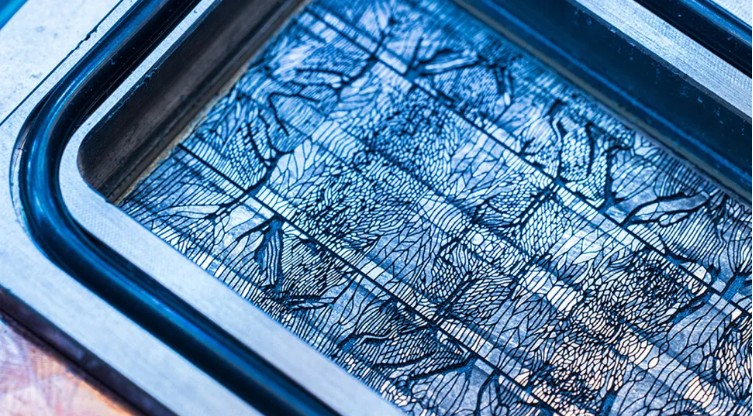
Microsoft has unveiled a chip cooling breakthrough using microfluidics, tiny grooves etched directly into silicon that channel coolant through the heart of a processor, rather than sitting on top of it, tells Live Science. The idea is to deal more efficiently with extreme heat “right where it occurs.”
Traditional cooling methods, such as cold plates, suffer from limitations. They sit above insulating layers, which blunt how fast heat can escape. Microsoft’s microfluidic design overcomes this by routing liquid inside microscopic channels etched into the die itself. The result: up to three times better cooling performance compared with cold plates, depending on workload. In tests on GPUs running simulated workloads, the system cut peak temperature rise in silicon by 65%.
To shape the microchannel networks, Microsoft worked with Swiss startup Corintis. They used bio-inspired patterns, think branching veins, and AI to map heat hotspots and optimize coolant paths. Because the channels are etched into the chip, cooling is closer to the hotspots and more direct.
This innovation could have big ripple effects. As AI models grow larger and chips become more complex (e.g., 3D-stacked architectures), managing heat is among the biggest engineering obstacles. Microsoft claims that microfluidics may allow chips to run harder, even overclock under peak demand, without overheating. It might also enable denser server packing in data centers, because thermal constraints would loosen.
Challenges remain. Etching precise microchannels that don’t weaken silicon, managing coolant leak risks, integrating this into chip packaging, and scaling manufacturing are not trivial. But Microsoft’s success in the lab suggests that direct, in-die cooling could become a critical tool in the toolbox for next-generation AI infrastructure.
