

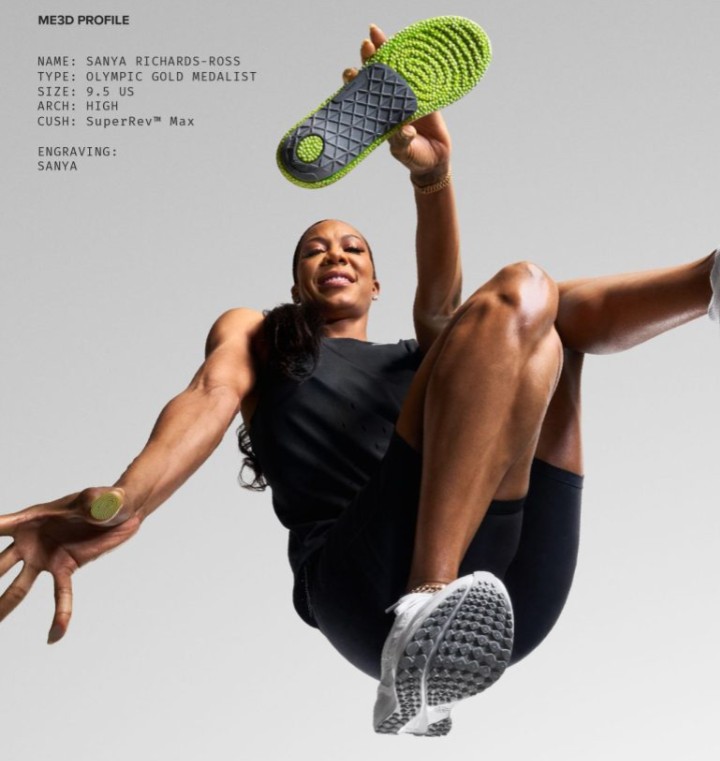
Superfeet is expanding access to custom orthotics by launching a direct-to-consumer service that uses iPhone scanning and 3D printing to create personalized insoles. The initiative aims to simplify a process that has traditionally required in-store assessments or visits to medical specialists, making customized foot support more accessible to a wider audience, tells 3D Printing Industry Blog.
The new system allows customers to use an iPhone equipped with depth-sensing capabilities to scan their feet at home. The captured data is then processed to generate a detailed digital model of each foot. Based on this information, Superfeet designs insoles tailored to an individual’s anatomy and support requirements before manufacturing them through additive manufacturing technologies.
The approach reflects a broader trend in footwear and healthcare products, where digital scanning, computational design, and 3D printing are enabling mass customization. Rather than relying on standardized sizes and shapes, manufacturers can create products optimized for individual users while maintaining scalable production processes. For insoles, this means more precise arch support, pressure distribution, and overall fit.
According to the article, the digital workflow reduces many of the barriers traditionally associated with custom orthotics. Consumers can complete the scanning process remotely, eliminating the need for specialized equipment or appointments. The resulting design data can be quickly translated into production, allowing for a streamlined customer experience.
The development also highlights the growing role of smartphone technology in personalized manufacturing. Advanced sensors originally developed for facial recognition and augmented reality applications are increasingly being adapted for product design, health monitoring, and biometric analysis. By combining these capabilities with additive manufacturing, companies can deliver customized products directly to consumers with greater efficiency.
For the 3D printing industry, the launch demonstrates another practical application of digital manufacturing beyond prototyping. It showcases how consumer devices can be integrated into end-to-end production workflows, from data capture to final product delivery.
The initiative underscores the continuing convergence of mobile technology, digital design, and additive manufacturing. As scanning tools become more accessible and manufacturing workflows more automated, personalized products such as custom insoles may become a standard offering rather than a specialized service.
