

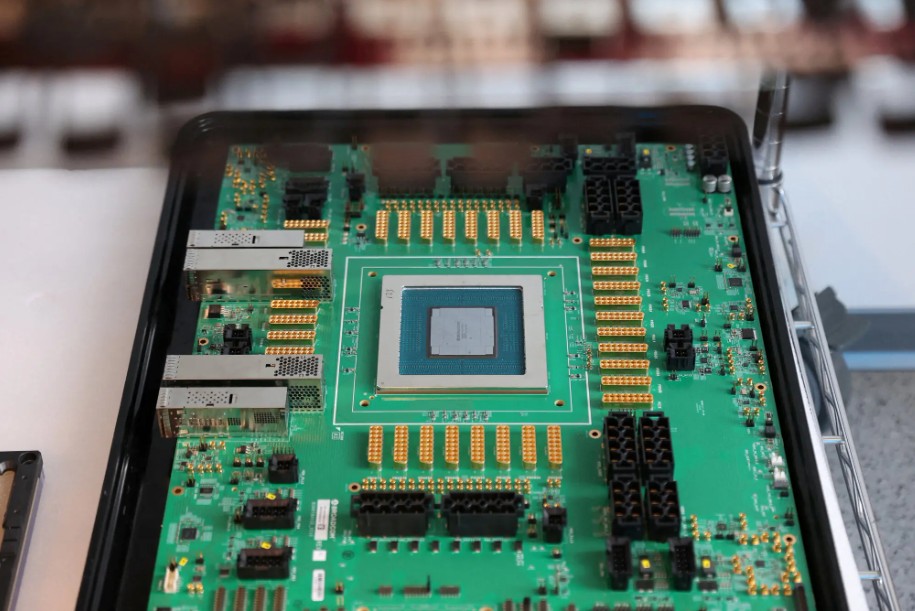
OpenAI has taken a significant step toward building its own artificial intelligence infrastructure with the introduction of Jalapeño, its first custom AI chip developed in collaboration with semiconductor company Broadcom. The chip is designed specifically to run AI models such as ChatGPT, representing an important milestone in OpenAI’s strategy to control more of the hardware that powers its services while reducing dependence on external chip suppliers, tells The New York Times (full article available to subscribers).
The announcement comes amid an unprecedented expansion of AI infrastructure. OpenAI plans to deploy enough of its custom processors to support data centers consuming up to 10 gigawatts of electricity, a level of power capable of supplying millions of homes. The company has already begun constructing its first large-scale AI data center in Abilene, Texas, and intends to expand its infrastructure across the United States, Europe, and the Middle East.
Although OpenAI continues to work with leading chip suppliers including Nvidia, AMD, and startup Cerebras, developing its own processors offers greater flexibility and negotiating power. Nvidia currently dominates the AI accelerator market, but growing demand has prompted technology companies such as Google, Amazon, and OpenAI to invest in custom silicon tailored to their specific workloads. Google has also partnered with Broadcom to design proprietary AI chips, reflecting a broader industry shift toward specialized hardware.
Unlike chips used to train large language models, Jalapeño is optimized for AI inference, the process of delivering trained models to businesses and consumers. According to OpenAI, early testing indicates that the processor performs key workloads with efficiency close to the hardware’s theoretical limits, suggesting strong potential for large-scale deployment.
Another notable achievement is the speed of development. OpenAI and Broadcom completed the chip’s design in just nine months, an unusually short timeline for a project of this complexity. However, semiconductor development remains an iterative process, and many chips undergo multiple design revisions before entering mass production.
While OpenAI has not announced a commercial rollout schedule, Jalapeño signals the company’s long-term commitment to building an integrated AI ecosystem where custom hardware, software, and global data center infrastructure work together to support the next generation of artificial intelligence applications.
