

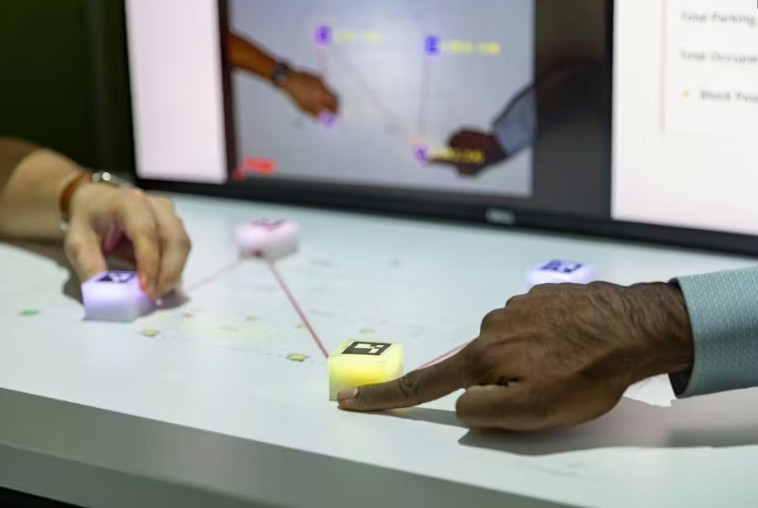
Daedal is a new platform developed by Gresham Smith that reimagines architectural space planning as a real-time, interactive process rather than a series of delayed reviews and static drawings, says BDC Network. The idea is to merge physical and digital design workflows so that teams can work together on layouts and immediately see the effects of their decisions without waiting for slow back-and-forth between models and feedback. This game-like approach aims to make the design experience faster, clearer, and more collaborative.
Traditional space planning tools often force designers and stakeholders to wait for digital updates or interpret static reports. Daedal flips this dynamic by allowing teams to sketch or place elements freely, with instant digital feedback that reveals constraints, opportunities, and impacts in real time. Visual cues and contextual insights appear as changes are made, helping everyone understand outcomes without interrupting the design flow. This “phygital” experience, blending hands-on activity with responsive computing, lets participants stay engaged and focused on design intent rather than technical translation.
Daedal’s interface is described as game-like because it creates a continuous loop of action, reaction, and refinement. Rather than isolated tasks that require separate analysis steps, spatial planning becomes an exploratory activity where the software and users react to each other’s moves. Decisions are tracked automatically and shared across the group, so every participant sees the same context and can discuss possibilities with a common understanding of design consequences.
Proponents argue that this approach reduces miscommunication, surfaces problems earlier, and makes collaborative design more intuitive. By shifting feedback into real time, Daedal enables teams to iterate more quickly and with greater confidence, encouraging creative solutions that might otherwise be lost in slow analytical cycles. In doing so, it aims to turn routine planning into a smoother, more collaborative, and more engaging part of the architectural process.
