

The Defense Advanced Research Projects Agency, or DARPA, has a history of setting ambitious technical goals and allowing engineers to find unconventional ways to achieve them. Hardware FYI examines this approach through the DARPA Lift Challenge, a competition designed to push lightweight vertical-lift aircraft far beyond existing performance levels.
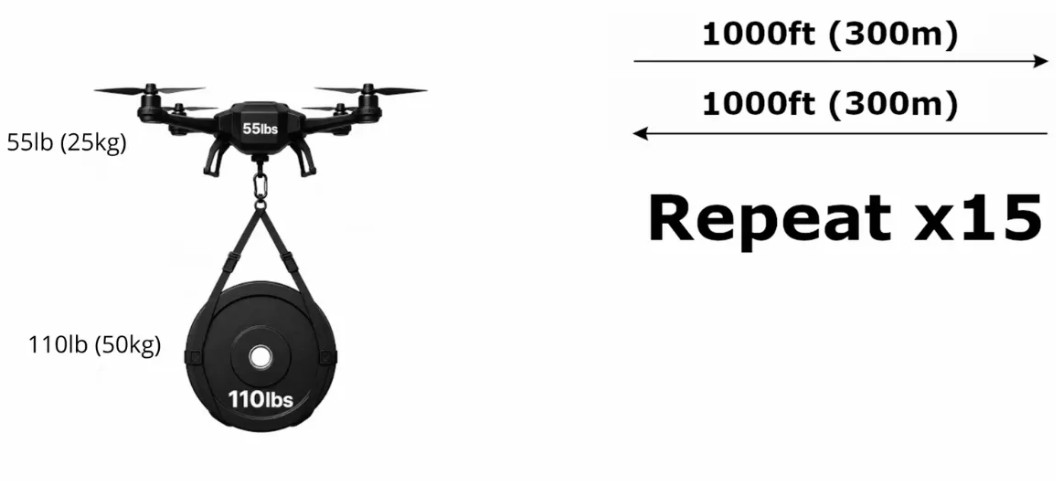
The challenge calls for aircraft weighing less than 55 pounds that can take off vertically and carry at least 110 pounds over a specified course. DARPA has set an even more ambitious target: a 4:1 payload-to-aircraft weight ratio. A 55-pound aircraft reaching that goal would carry 220 pounds. By comparison, leading agricultural drones achieve ratios below 1:1. Competitors must reach at least 2:1 to qualify. DARPA is offering $6.5 million in total prizes, including $2.5 million for first place.
The extreme requirements have encouraged engineers to explore unusual aircraft configurations. RotoWings uses two radio-controlled airplanes connected together, effectively creating a large rotating system. Phoenix Drone LLC has developed a tandem-rotor configuration resembling a Chinook helicopter. Avidrone, meanwhile, entered a more conventional single-rotor helicopter and was leading during the competition. Its 29.3-pound aircraft carried a 112.4-pound payload, producing a 3.84:1 ratio.
The competition illustrates a broader philosophy behind DARPA programs. Instead of prescribing a particular engineering solution, the agency establishes an exceptionally difficult objective and distributes research and development across teams willing to attempt it. The approach previously contributed to technologies such as autonomous vehicles through the DARPA Grand Challenge and networking through ARPANET.
The Lift Challenge applies that model to aviation. By making the performance target deliberately difficult, DARPA is encouraging engineers to reconsider conventional assumptions about aircraft weight, payload capacity, propulsion, and vertical flight.
