

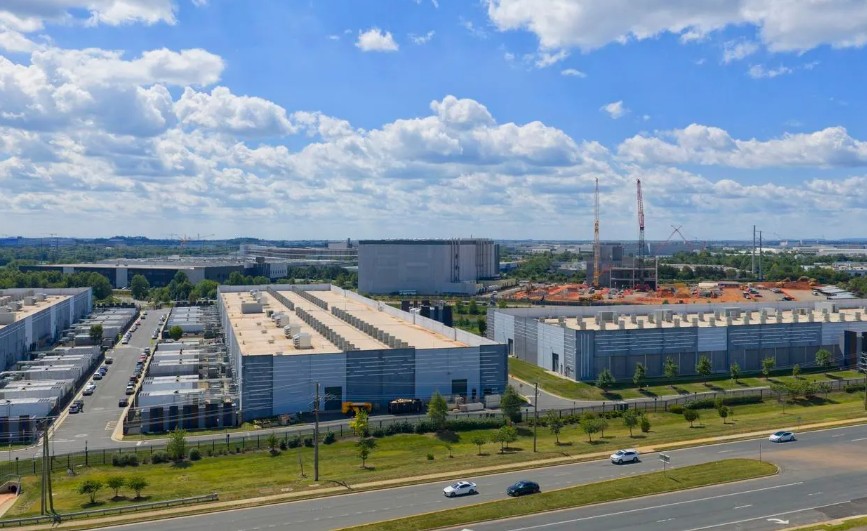
For decades, data centers quietly powered the internet behind the scenes, supporting websites, email, online banking, and cloud applications. Today, they have become one of the fastest-growing forms of infrastructure because of the explosive demand for artificial intelligence. As AI models require enormous computing power, companies are building larger and more specialized facilities, making data centers increasingly visible in communities around the world, tells Forbes.com.
A data center is a purpose-built facility that houses thousands of servers, storage systems, networking equipment, backup power supplies, cooling systems, and security infrastructure. These components work together around the clock to process, store, and transmit digital information. Whether someone streams a movie, backs up photos, completes an online payment, or uses an AI chatbot, a data center performs much of the computing required to deliver those services almost instantly.
Not all data centers serve the same purpose. Enterprise data centers support a single organization, while colocation facilities lease space to multiple customers. Cloud providers operate massive hyperscale campuses that deliver computing services worldwide, and edge data centers bring processing closer to users to reduce latency. The rapid expansion of hyperscale facilities is largely driven by AI, which depends on specialized processors and consumes far more electricity than traditional computing workloads.
The industry’s rapid growth has created significant engineering and environmental challenges. Data centers require vast amounts of electricity, water for cooling, and reliable high-speed network connections. Securing sufficient power has become one of the biggest obstacles to new construction, leading some operators to develop on-site energy generation or seek locations with abundant electrical capacity. While new facilities create jobs and stimulate local economies, they also raise concerns about resource consumption and pressure on power grids.
As AI adoption accelerates, data centers are becoming the physical foundation of the digital economy. Future facilities are expected to incorporate more efficient cooling technologies, advanced power management, and increasingly specialized hardware. Although most users rarely think about them, these buildings have become essential infrastructure, supporting everything from business operations to scientific research and the next generation of intelligent applications.
