

AI-generated deepfakes are becoming difficult for people to identify, creating new risks for videoconferencing, financial transactions, and online communications. Researchers at the University of Colorado Boulder have developed a detection method designed to identify manipulated video while using substantially less computing power than existing approaches, tells Tech Xplore.
The challenge was demonstrated when doctoral candidate Tuan Tran showed computer scientists videos of the real Brad Pitt alongside an AI-generated version. Only half the audience correctly identified the deepfake. Such realism has practical consequences. Deepfake impersonations have already been used in financial fraud, including a Hong Kong case involving a $25 million transfer.
Current detection systems typically examine reconstructed video frames. Because internet video is transmitted in compressed form, the system must first decompress frames to full resolution before analyzing faces. That process requires significant computing resources and makes real-time detection difficult to scale across videoconferencing platforms.
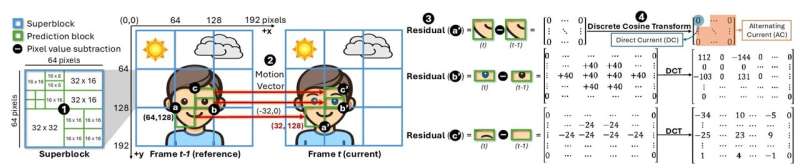
The CU Boulder team developed a different approach called DeepSFU. Instead of reconstructing every frame, the system analyzes information already present in compressed video. Video compression records changes between frames, using larger pixel blocks for relatively static areas and smaller blocks where detailed movement occurs, such as facial expressions. Sudden changes in a face produce patterns that can signal possible manipulation.
DeepSFU examines these compression characteristics directly. When it detects suspicious activity, it requests a fresh, complete frame from the sender’s device and applies AI to determine whether the video is fake. The researchers needed to analyze data from only 1 in every 100 frames.
Tests involving 1,000 online deepfake videos produced near-perfect detection accuracy while requiring 143 times less computing power than existing models. The researchers now plan to adapt the technology for large-scale videoconferencing, where efficient real-time detection could provide an important defense as AI-generated impersonations become increasingly convincing.
