

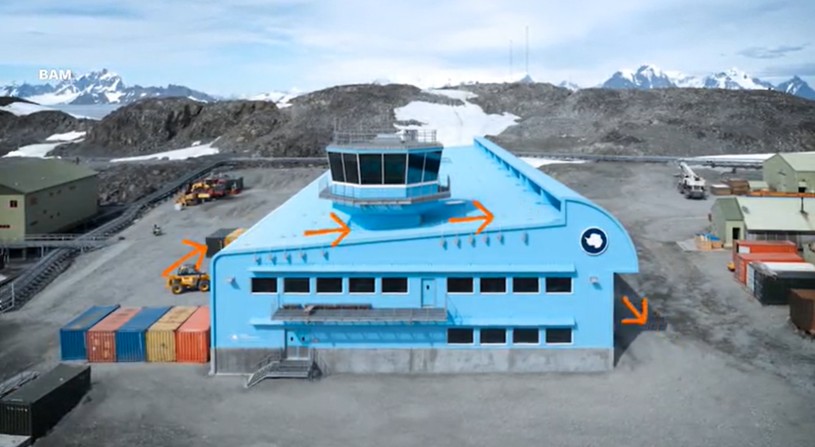
Antarctica is often described as architecture’s final frontier, a place where extreme cold, relentless winds, shifting ice, and complete isolation push building design to its limits. According to a CNN article, few architects have shaped this environment more profoundly than Hugh Broughton, whose work has transformed the way research stations are conceived and constructed across the frozen continent.
Broughton has spent much of his career designing facilities that allow scientists to live and work safely in conditions unlike anywhere else on Earth. His projects combine engineering, environmental awareness, and human-centered design to address challenges ranging from subzero temperatures and heavy snowfall to logistical constraints that make construction extraordinarily difficult.
One of his best-known achievements is the Halley VI Research Station, developed for the British Antarctic Survey. Built on a floating ice shelf that constantly shifts toward the sea, the station was designed to be fully relocatable. Elevated on hydraulic legs equipped with skis, the structure can be moved as ice conditions change, preventing it from being buried by snow or threatened by ice fractures. The project represented a major departure from traditional polar architecture and demonstrated that research facilities could adapt to their environment rather than simply resist it.
The CNN article highlights how Antarctica has become a testing ground for innovative architectural ideas. Lessons learned from designing in such extreme conditions are increasingly relevant elsewhere as climate change forces architects to rethink resilience, sustainability, and adaptability. Research stations must operate efficiently with limited resources, withstand severe weather, and provide comfortable living conditions for occupants who may spend months cut off from the rest of the world.
Broughton’s work illustrates the growing intersection of architecture, science, and environmental stewardship. As nations continue investing in polar research, Antarctica remains a laboratory not only for scientific discovery but also for architectural innovation. The continent’s demanding conditions are driving solutions that could influence the future of building design far beyond the polar regions.