

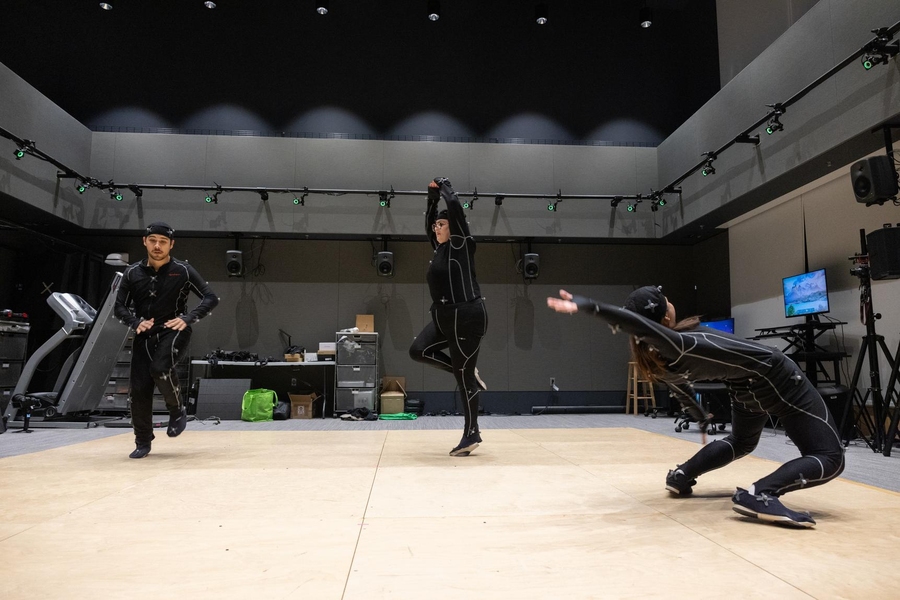
An article from MIT News explores emerging research at the Massachusetts Institute of Technology aimed at improving the relationship between human movement and digital systems. The work focuses on creating technologies that can better capture, interpret, and respond to the complexity of real physical motion rather than relying on simplified or artificial approximations.
The article highlights efforts to bridge the gap between the human body and computational environments through motion sensing, biomechanics, machine learning, and interactive design. Researchers are investigating ways to model movement more naturally so that digital systems can understand posture, balance, gesture, and physical behavior with greater precision. This could improve applications ranging from rehabilitation and sports science to robotics, virtual reality, and wearable technologies.
A central challenge discussed in the article is that human motion is extraordinarily nuanced. Small adjustments in balance, muscle coordination, timing, and body mechanics often contain critical information that traditional digital systems struggle to capture accurately. Existing motion-tracking systems may reduce movement into simplified data points, losing important aspects of natural physical behavior in the process.
MIT researchers are working to combine advanced sensing technologies with AI-driven analysis capable of interpreting movement dynamically and in context. Instead of merely recording motion, the systems aim to understand intent, adaptation, and interaction with surrounding environments. The article suggests this represents a broader shift toward computational systems that respond to humans in more fluid and embodied ways.
The research also emphasizes interdisciplinary collaboration. Engineers, computer scientists, designers, and movement specialists are contributing expertise to create systems that align more closely with the realities of human physical experience. According to the article, improving digital understanding of movement could make future technologies feel less mechanical and more intuitive for users.
Potential applications extend well beyond entertainment or consumer devices. Improved motion interpretation could support physical therapy, assistive technologies, ergonomic design, athletic training, remote collaboration, and human–robot interaction. Systems capable of accurately understanding movement may eventually allow digital environments to adapt continuously to human needs and behaviors.
Ultimately, the article presents the research as part of a larger effort to humanize digital technology. Rather than forcing people to conform to rigid interfaces, future systems may increasingly learn to accommodate the natural complexity of human motion itself.
