

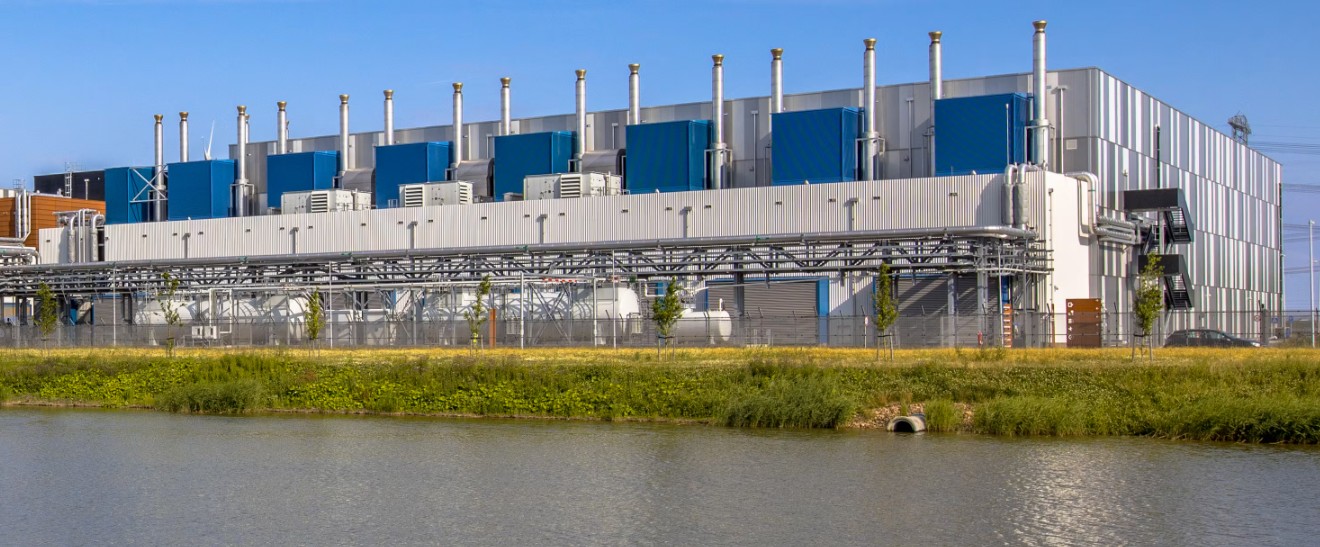
The rapid expansion of artificial intelligence is driving construction of data centers worldwide, increasing demand for both electricity and water. A recent UN report estimates that water consumed by AI data centers could equal the daily water requirements of 1.3 billion people by 2030. This growing demand is raising questions about whether conventional cooling methods remain sustainable, says The Conversation.
Most data centers rely primarily on air to cool servers. Fans circulate cool air around electronic equipment, while chilled water loops transfer waste heat outside. Cooling towers then spray warm water into ambient air, allowing some of it to evaporate and cool the remaining water before recirculation.
Water is particularly effective because of its high specific heat capacity and latent heat of evaporation. Evaporative cooling can also reduce electricity consumption, which matters because electricity generation itself requires water. However, dependence on evaporation creates problems in regions facing water shortages.
Air presents another efficiency challenge. It is a poor heat-transfer medium compared with water, so data centers require substantial fans, pumps, compressors, and cooling equipment. Cooling infrastructure can consume energy comparable to that used by computing equipment itself.
Direct-to-chip liquid cooling offers an alternative. Sealed pipes deliver coolant directly to power-hungry CPUs and GPUs, removing heat more efficiently than air. Because liquid transfers heat effectively, it can leave servers at temperatures of 60°C or higher. The hotter water also creates opportunities to reuse waste heat elsewhere.
Some data centers already employ direct liquid cooling, but widespread adoption faces obstacles. Retrofitting existing air-cooled facilities can be expensive, and some equipment still requires air cooling. Regular server replacement cycles of two to seven years could nevertheless provide opportunities for gradual adoption.
With data centers consuming enormous amounts of electricity, improving cooling efficiency has become increasingly important. Direct-to-chip cooling could reduce the size and energy requirements of cooling infrastructure, lower dependence on evaporative water use, and make recovering otherwise wasted thermal energy more practical.
