

Building an aircraft that approaches the speed of sound is usually associated with major aerospace companies and well-funded research programs. Radio-controlled (RC) aircraft, however, offer one of the few opportunities for individuals to experience the complete aircraft development process, from aerodynamic design and structural engineering to propulsion, testing, and flight. They allow engineers and hobbyists to translate theoretical concepts into fully functioning flying machines while gaining hands on experience with the tradeoffs that shape real aircraft, tells this Hardware FYI article.
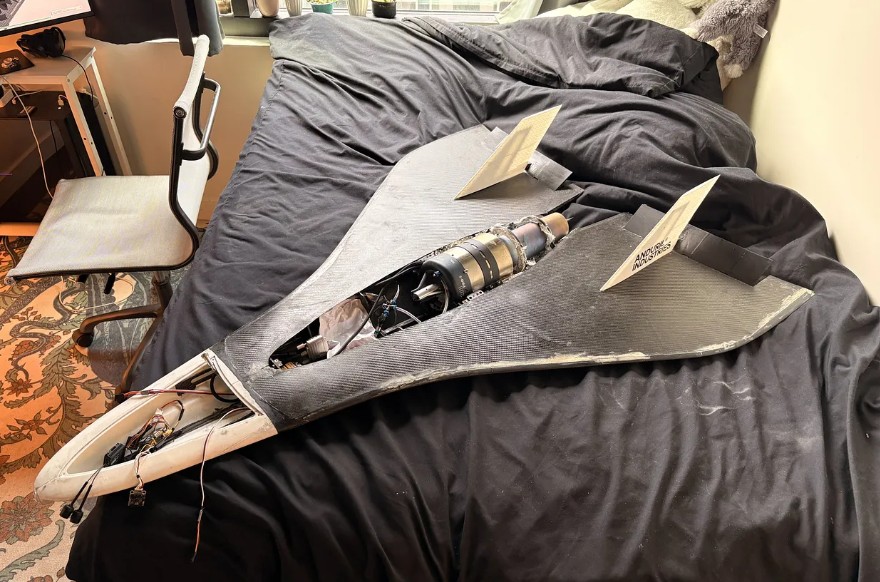
That spirit of experimentation is reflected in a new high-speed RC jet designed by a Georgia Tech student. Named Reaper, the aircraft has attracted widespread attention after its creator claimed it could become the world’s fastest RC airplane. Built in a college dormitory, the aircraft weighs about 5 kilograms, uses a carbon fiber airframe, and is powered by a 250-newton miniature turbojet. The goal is to exceed 500 mph, surpassing the current official jet-powered RC speed record of 465.5 mph set by Niels Herbrich’s Inferno in 2017.
The similarities between Reaper and Inferno quickly sparked discussion online. Both feature compact, highly swept, blended delta configurations centered around a single turbine engine. While the overall appearance is comparable, detailed design information for Herbrich’s aircraft has never been publicly released, making direct copying unlikely. Instead, the resemblance illustrates a common engineering principle: when designers work within the same demanding constraints, they often arrive at similar solutions.
In high-speed aircraft, every design decision matters. Small variations in the airfoil profile, engine inlet geometry, flight control tuning, and surface finish can significantly affect aerodynamic performance and stability. These subtle differences distinguish one aircraft from another, even when their overall shapes appear nearly identical.
The project demonstrates that RC aviation continues to serve as an accessible testbed for advanced aerospace engineering. Beyond the pursuit of speed, it provides valuable insight into aerodynamics, propulsion, materials, and flight dynamics, showing that innovative engineering can emerge from small-scale experimentation as readily as from professional aerospace programs.
