

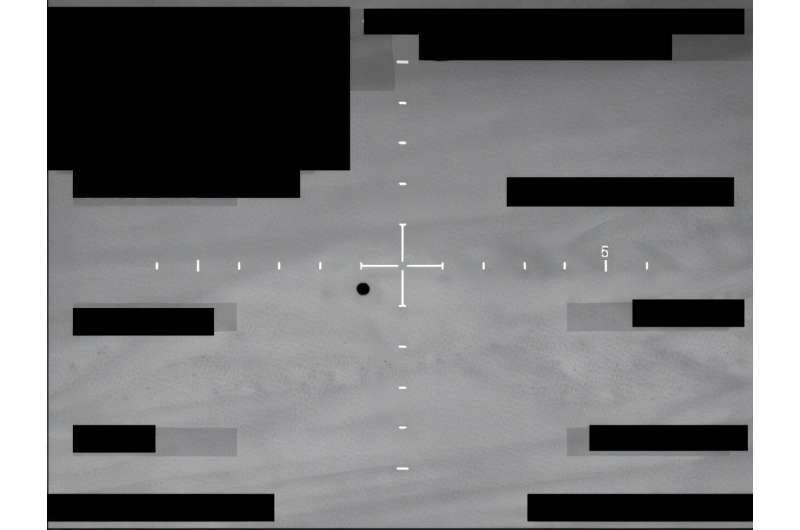
The Pentagon’s effort to investigate unidentified aerial phenomena (UAPs), once commonly associated with UFOs, is increasingly focused on a far more terrestrial challenge: drones. In a question-and-answer discussion featured by Tech Xplore, experts explain that the rapid growth of unmanned aerial systems has fundamentally changed the nature of unexplained sightings reported by military personnel and civilians.
For decades, reports of unusual objects in the sky fueled speculation about extraterrestrial visitors. However, advances in drone technology have created a new reality in which many sightings that might once have seemed mysterious can now be linked to increasingly sophisticated unmanned aircraft. Modern drones are smaller, faster, quieter, and more capable than their predecessors, making them difficult to identify, especially in crowded or poorly monitored airspace.
The article highlights the role of the Pentagon’s All-domain Anomaly Resolution Office (AARO), which was established to investigate reports of unexplained objects observed in the air, at sea, in space, or across multiple domains. While public interest often focuses on the possibility of alien spacecraft, investigators are primarily concerned with national security. Their task is to determine whether unusual sightings represent foreign surveillance platforms, emerging technologies, sensor errors, or other potential threats.
Experts note that the increasing availability of commercial drones has complicated the challenge. Devices that were once restricted to military programs are now accessible to hobbyists, researchers, and businesses. At the same time, rival nations are developing advanced unmanned systems capable of reconnaissance, intelligence gathering, and potentially disruptive operations near sensitive military installations.
The discussion also emphasizes that unexplained does not automatically mean extraterrestrial. Many reports remain unresolved because of limited data, conflicting observations, or sensor limitations rather than evidence of nonhuman technology. Investigators must carefully separate genuine anomalies from misidentifications, atmospheric effects, equipment glitches, and conventional aircraft.
Ultimately, the article argues that the modern UAP debate is less about alien visitors and more about understanding a rapidly evolving technological landscape. As drones become increasingly common and capable, the challenge facing the Pentagon is not proving the existence of extraterrestrials but maintaining awareness of what is operating in increasingly complex skies.
