

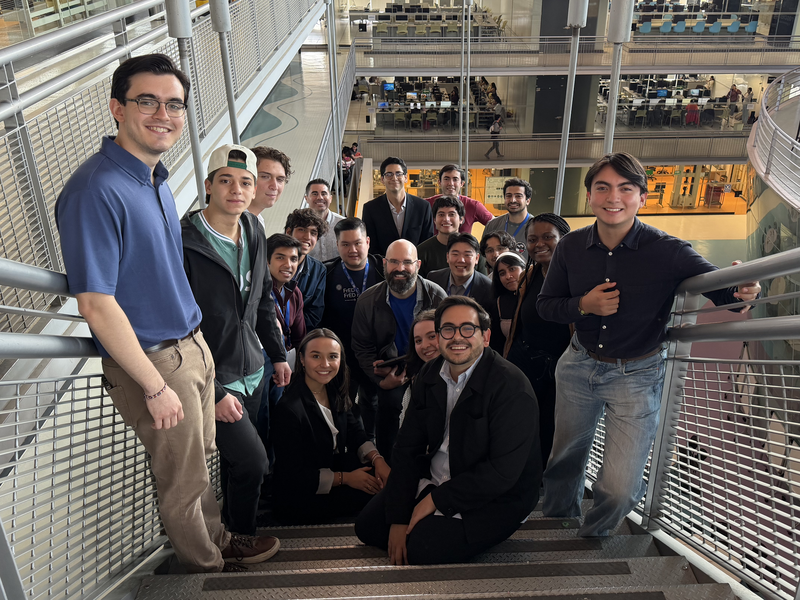
Manufacturing education is evolving beyond lectures and laboratory demonstrations as universities seek to better prepare students for increasingly digital production environments. Researchers from MIT and Tecnológico de Monterrey have developed the Factory of the Future Education Device (FrED), a compact educational manufacturing platform that recreates the experience of a modern production line. Instead of learning manufacturing concepts solely through textbooks, students build, operate, and improve a working factory, gaining practical experience with automation, process optimization, and data-driven decision-making, tells MIT News.
FrED centers on a desktop fiber extrusion system that allows students to manufacture products while studying every stage of the production process. The platform is intentionally affordable and modular, making it accessible for universities that cannot invest in full-scale industrial equipment. Since its introduction, nearly 500 students across campuses in Cambridge, Monterrey, and Mexico City have used the system to investigate manufacturing challenges through graduate research projects, undergraduate studies, and collaborative engineering activities.
A key feature of the educational factory is its emphasis on continuous experimentation. Students are encouraged to modify machine components, improve production workflows, and analyze manufacturing data to solve real engineering problems. This mirrors the iterative nature of modern industrial environments, where engineers continually refine production systems to improve quality, efficiency, and sustainability. The platform also promotes collaboration between mechanical engineering, materials science, automation, and computer science, reflecting the interdisciplinary nature of today’s manufacturing sector.
The project extends beyond traditional manufacturing education by incorporating emerging Industry 4.0 technologies. Future developments include digital twins, immersive learning environments, intelligent controllers, and downstream manufacturing systems that communicate through shared production data. These additions will help students understand how connected machines, simulation, artificial intelligence, and analytics work together in smart factories.
The researchers believe the educational factory offers a scalable model for engineering education worldwide. By combining affordable hardware with hands-on experimentation and digital manufacturing tools, FrED prepares students for the realities of advanced production while encouraging innovation and problem-solving. As manufacturing becomes increasingly automated and data-driven, platforms such as FrED could play an important role in developing the practical skills required by the next generation of engineers.
