

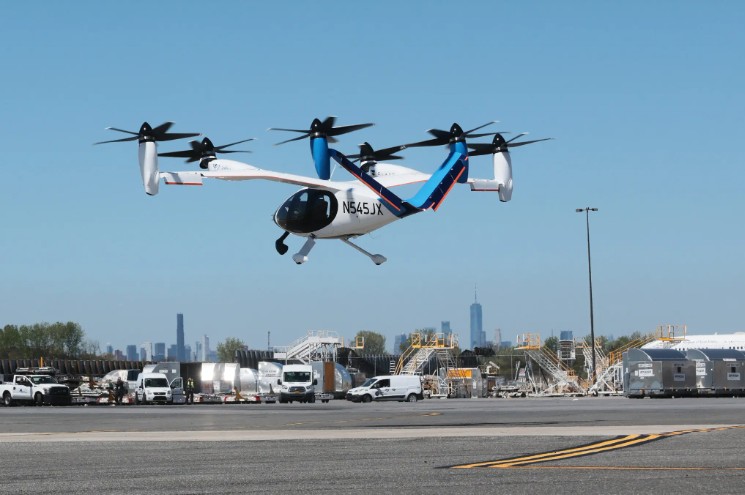
A recent demonstration flight by Joby Aviation highlighted the growing momentum behind electric air taxis in the United States. In April, one of the company’s electric vertical takeoff and landing (eVTOL) aircraft flew from New York’s John F. Kennedy International Airport to Manhattan in about 10 minutes, offering a glimpse of a future in which short urban trips could be completed far faster than by car. The flight was conducted under a federal initiative designed to accelerate the adoption of electric aircraft for passenger, cargo, and medical services, tells The New York Times (full article available to subscribers).
Supporters of the technology believe eVTOL aircraft could eventually replace helicopters and serve select transportation needs in urban areas. However, industry experts caution that widespread adoption is still years away. They expect the aircraft to initially serve niche markets rather than become a common mode of transportation. A key motivation behind federal support is ensuring that the United States remains competitive with countries such as China, which has made significant progress in drone technology and air taxi development.
Several American companies are leading the effort, including Joby Aviation, Archer Aviation, and Beta Technologies. These firms are developing aircraft that combine helicopter-like vertical takeoff capabilities with the efficiency of fixed-wing flight. Major industrial partners such as Toyota, Stellantis, and GE Aerospace have invested in the sector, providing manufacturing expertise and financial backing.
Despite technological advances, significant hurdles remain. Air taxis are expected to be expensive to manufacture, with early aircraft potentially costing millions of dollars. While operating expenses may be lower than those of helicopters because of simpler electric propulsion systems, concerns remain about battery durability, weather limitations, pilot availability, and regulatory restrictions. Additional infrastructure, including high-capacity charging stations, will also require substantial investment.
The biggest challenge is regulatory approval. Before commercial passenger operations can begin, the Federal Aviation Administration must certify these entirely new aircraft designs. Although companies have made progress toward certification, industry observers believe regulatory scrutiny will remain intense. Until that milestone is reached, air taxis will remain a promising but largely experimental transportation solution.
