

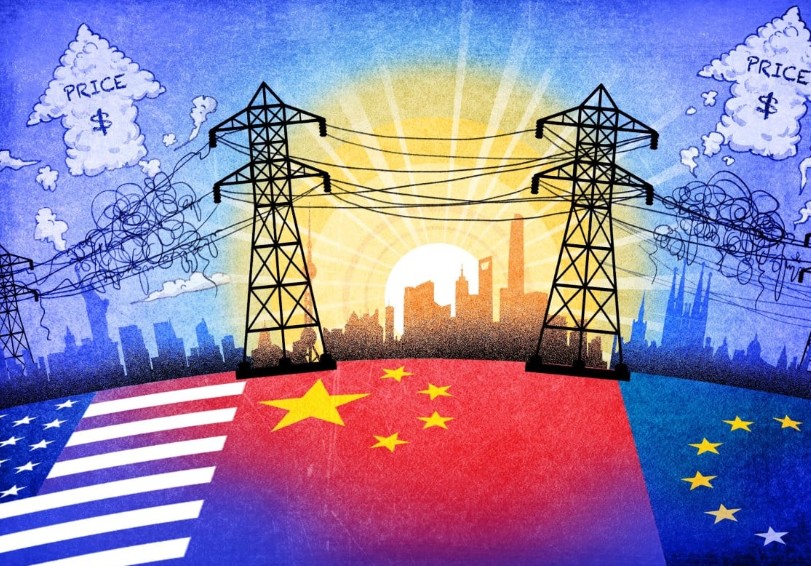
The South China Morning Post story examines a growing tension in the global economy: electricity demand from artificial intelligence data centers is rising fast while many Western power grids struggle to keep up. Recent blackouts and power disruptions in Europe and the United States highlight the vulnerability of aging infrastructure, as AI workloads drive increasing energy consumption. Major outages in the Eurotunnel and rolling blackouts in Portugal, Spain, and California highlight these strains. Meanwhile, China’s grid has remained unusually stable, having expanded capacity aggressively after earlier regional outages.
Data centers that host and train large AI models consume massive amounts of electricity. These facilities already account for a significant share of global power use and are projected to grow further as demand for AI services and computational capacity rises. Reports outside the article note that global data center electricity consumption could nearly double by 2030, driven largely by AI workloads that consume far more energy than traditional computing tasks.
China’s strategy centers on large, continued investment in generation capacity, transmission networks, and megaprojects such as a multi-billion-dollar hydropower project in Tibet. That expansion is designed to provide abundant, cheap, and increasingly cleaner power to support heavy industry and fast-growing tech sectors, including AI. Analysts say the scale and pace of China’s grid buildout give it a structural advantage over Western economies that are slower to add capacity, constrained by regulatory, environmental, and political hurdles.
In contrast, energy prices in Europe and the United States are relatively high, and grids often operate close to capacity even without new AI demand. This makes accommodating additional load from data centers more difficult without significant investment in generation and grid upgrades.
The article paints a picture of two energy paths: one where power infrastructure keeps pace with digital demand, and another where supply shortfalls could blunt future technological growth. China’s continued emphasis on expanding energy capacity may help it capture more of the economic benefits from the AI boom.
