

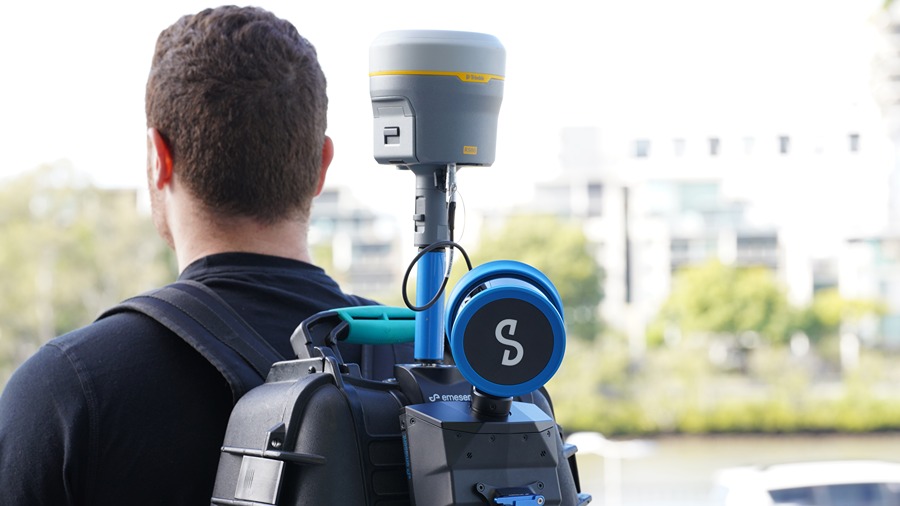
MUNICH, Germany, Sep 17, 2026 – Emesent has integrated its GX1 and Hovermap STX mobile Simultaneous Localization and Mapping (SLAM) scanners with Trimble Business Center and Trimble Connect, linking captured scan data with Trimble surveying, BIM and 3D modeling workflows. Emesent presented the integration at INTERGEO 2026.
Both scanners use Emesent’s localization and mapping technology for data capture in underground mines, GPS-denied environments, infrastructure inspection and terrain mapping applications.
Trimble Connect also links the resulting point clouds with Tekla Structures BIM software and Trimble SketchUp 3D modeling software.
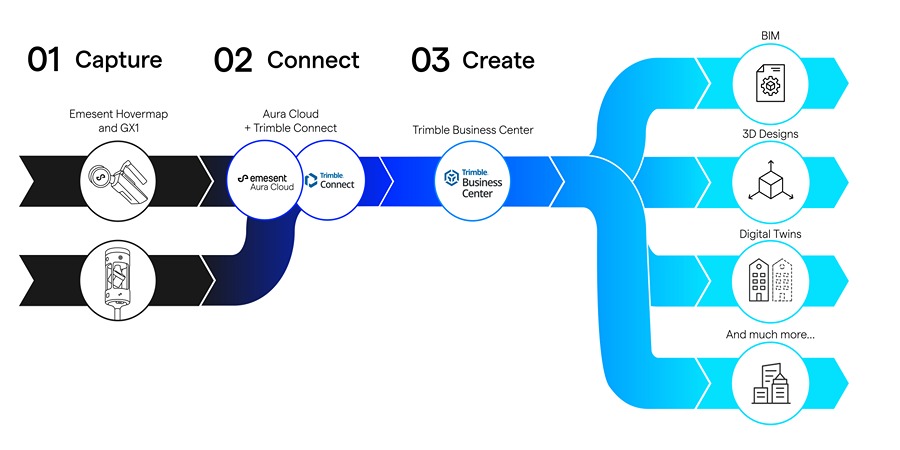
Key elements of the integration include:
- Positioning accuracy: Emesent specifies 5-10 mm accuracy for the GX1 using unconstrained SLAM and 15 mm accuracy with RTK/PPK. The GX1 includes an RTK/PPK receiver for georeferencing captured data. Hovermap STX can pair with Trimble’s GNSS system for RTK-validated positioning at the point of capture.
- Data transfer: Aura Cloud processes captured data into dense, georeferenced point clouds that transfer into Trimble Connect and Trimble Business Center without intermediate exports or workarounds.
- Downstream workflows: Point clouds stored in Trimble Connect can be used to create project deliverables and shared through existing Trimble workflows for BIM, as-built documentation, 3D modeling and digital twins.
“This integration brings the power of our proven SLAM-based scanning technology into Trimble’s industry-leading geospatial data management and collaboration software,” said Ryan Palfrey, director of product at Emesent. “From the Trimble ecosystem, we’re eager to see how end-users leverage our solutions to plug seamlessly into their workflows and turn jobs, in even the most challenging sites, into standard surveying deliverables.”
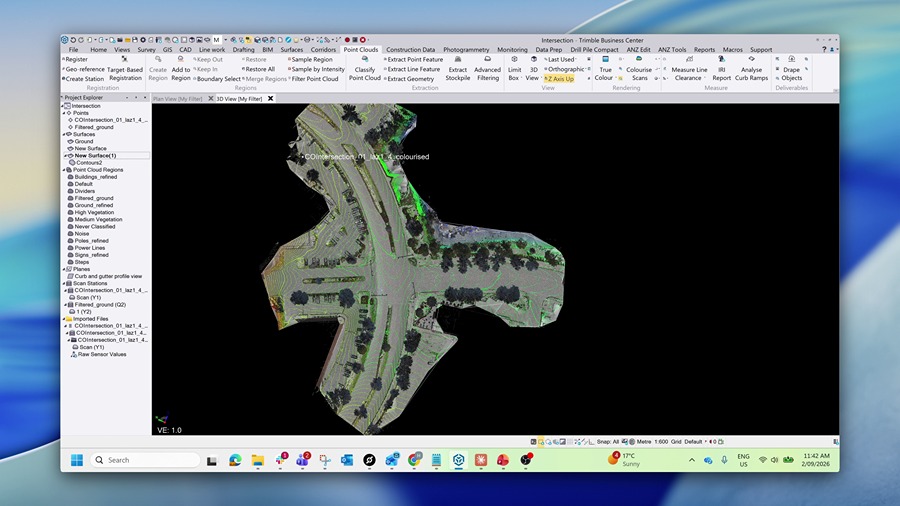
“Emesent has enabled their high-quality SLAM data to integrate with Trimble Connect and Trimble Business Center.” said Tim Lemmon, senior marketing director, geospatial at Trimble. “Trimble Connect is an extensible platform that is the gateway to the Trimble ecosystem, opening opportunities to integrate and extract full value from Emesent data within Trimble workflows.”
Source: Emesent
About Emesent

Emesent is a mapping and robotics company founded in 2018 and headquartered in Brisbane, Australia. The company developed from robotics research at Australia’s Commonwealth Scientific and Industrial Research Organization. Emesent develops hardware and software for 3D data capture, processing, visualization and autonomous navigation. Its products include Hovermap, GX1, Aura, Commander and the Cortex autonomy engine. Hovermap combines LiDAR mapping with autonomous navigation for GPS-denied environments. GX1 combines SLAM, RTK, panoramic imaging and LiDAR scanning for ground-based mapping. Aura processes scan data into point clouds, while Commander supports mission planning and monitoring. Emesent serves mining, AEC, defense, geospatial, oil and gas, and public safety organizations. Its systems operate on drones, ground robots, vehicles, backpacks and handheld configurations. Emesent reports more than 300 customers across over 50 countries. The company employs more than 150 people and works with over 50 resellers worldwide.
About Trimble

Trimble Inc., established in 1978, is a technology company focused on creating tools that connect the physical and digital worlds. Based in Westminster, CO, the company serves industries such as agriculture, construction, geospatial technology, and transportation. Its products include GNSS receivers, optical devices, machine control systems, and widely used software and services. Trimble’s construction technology improves project efficiency by using data throughout each build stage. The company employs around 12,000 people worldwide. The company prioritizes innovation and sustainability, working to make industries productive, safer, and environmentally friendly.
