

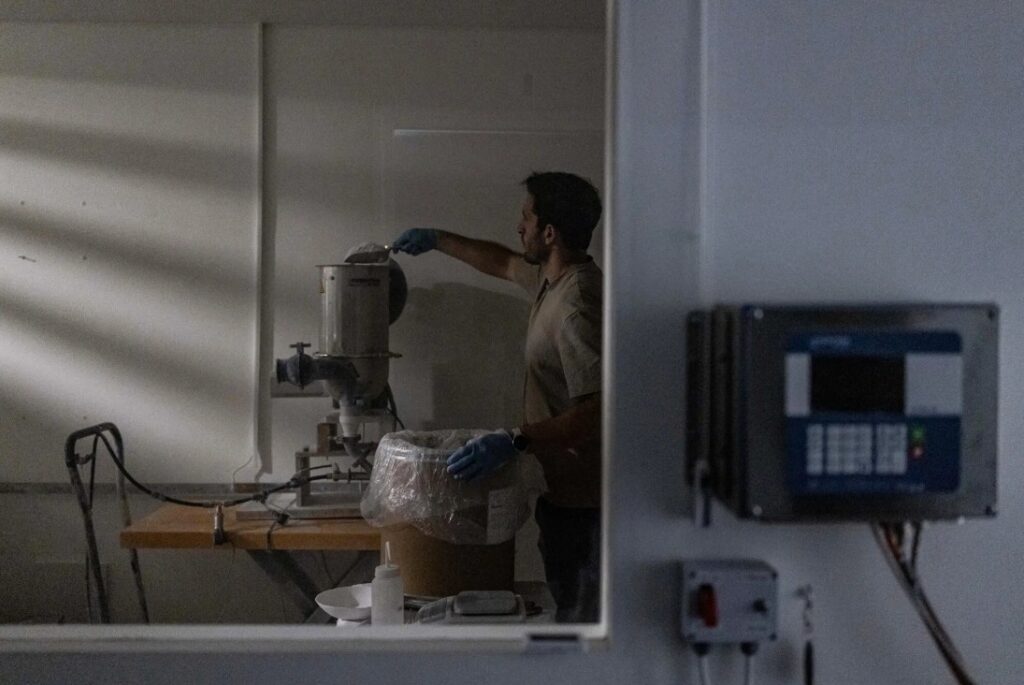
The New York Times article (full article available to subscribers) examines the growing ambitions of Stardust Solutions, a startup attempting to advance solar geoengineering from theory into deployable technology. Founded in 2023 by former members of Israel’s nuclear energy program, the company has revealed details of reflective particles designed to scatter sunlight away from Earth in an effort to cool the planet.
The company’s proposed approach relies on amorphous silica and calcium carbonate particles released into the upper atmosphere through high-altitude aircraft. Stardust claims the particles are biodegradable, non-toxic, and unlikely to accumulate in oceans or soil. According to the company, dispersing 10 million tons of these particles over several years could cool the atmosphere by roughly 1.5°C.
Chief executive Yanai Yedvab argues that solar radiation management deserves serious consideration as greenhouse gas emissions continue to rise and climate disasters intensify. He compares Stardust’s secrecy during development to pharmaceutical research conducted before regulatory review, emphasizing that the company has only carried out laboratory testing so far.
Yet the article makes clear that geoengineering remains deeply divisive. More than 600 scientists and academics have called for an international ban, warning that manipulating atmospheric conditions could disrupt monsoon systems, agriculture, and regional weather patterns. Critics also fear that geoengineering may reduce political pressure to cut fossil-fuel emissions.
Researchers quoted in the article acknowledge that the materials Stardust selected are relatively familiar and scientifically plausible. However, many remain concerned about unanswered environmental and ethical questions, especially regarding governance and transparency. Several scientists criticize the company’s reliance on patents and nondisclosure agreements while pursuing technologies capable of altering global climate systems.
The report ultimately frames Stardust Solutions as both a scientific experiment and a political flashpoint. As climate risks escalate, solar geoengineering is shifting from speculative debate toward practical consideration, forcing governments, researchers, and the public to confront whether humanity should intentionally engineer the atmosphere to manage planetary warming.
