

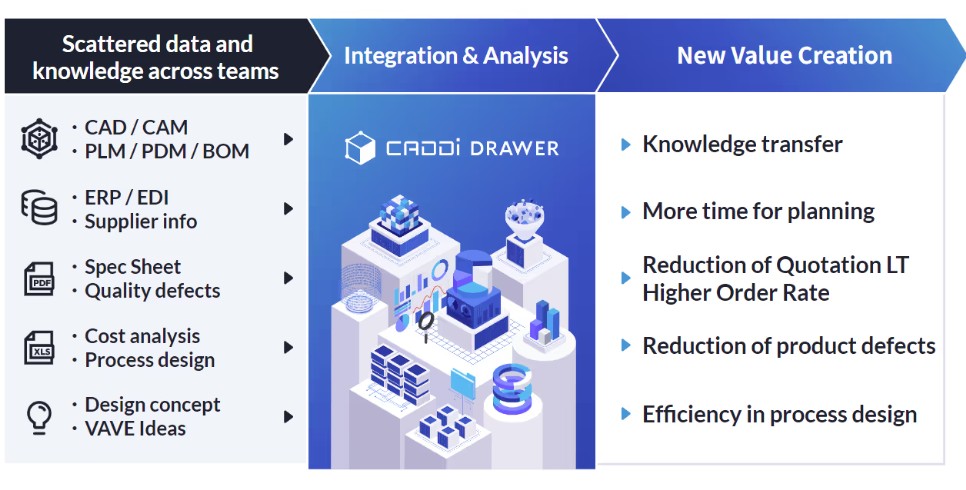
Procurement teams typically depend on ERP systems, supplier records, and inventory databases to make purchasing decisions, but these sources often provide an incomplete view of manufactured components. CADDi argues that engineering drawings can fill these gaps by providing detailed technical information that traditional procurement systems frequently lack.
Engineering drawings contain material specifications, dimensions, tolerances, surface finishes, and other requirements that influence the cost and manufacturability of parts. Extracting and structuring this information can give procurement teams a clearer understanding of what they purchase and why similar-looking components may carry different prices.
Artificial intelligence and machine learning can make large drawing archives more useful. AI can extract metadata such as materials, dimensions, and part information at scale, while machine learning can identify patterns across the resulting datasets. Connecting drawing information with ERP and procurement systems can also create a digital thread linking design, purchasing, and manufacturing.
CADDi identifies several potential benefits. Drawing-level information can improve spend analysis by revealing exactly which parts, materials, and services companies purchase. Procurement teams can use technical requirements and historical pricing to evaluate suppliers, consolidate purchasing volumes, and negotiate contracts. Comparing drawings can also expose similar or interchangeable components, creating opportunities to standardize designs and replace custom parts with existing alternatives.
Building such a strategy requires more than technology. CADDi emphasizes data governance, including clear ownership, metadata standards, storage policies, security, and data-quality monitoring. Organizations also need change management and executive support to encourage adoption across engineering and procurement.
CADDi positions its Explorer platform as one way to implement this approach. Explorer extracts dimensions, text, and shapes from drawings and connects them with quotation and supply-chain information. Keyword and similarity searches can then help procurement teams find comparable historical parts, assess previous prices and suppliers, support RFQs, and identify opportunities for strategic sourcing and cost reduction.
