

Modern products increasingly combine electronics, software, mechanical engineering, photonics, thermal management, and AI. Ansys, now part of Synopsys, argues that this complexity is making traditional, linear engineering workflows inadequate. Instead, future development will depend on connected ecosystems spanning silicon design through complete systems.
This silicon-to-systems strategy brings together electronic design automation, multiphysics simulation, software development, AI, and systems engineering. Synopsys CEO Sassine Ghazi describes deeper integration of electronics and physics, supported by AI and computing, as necessary for developing increasingly intelligent products.
Ansys already supports this ecosystem through academic, startup, technology, and channel programs. Its free student software has recorded more than 4.9 million downloads, while more than 3,080 startups across 65 countries have participated in the Ansys Startup Program during its first decade. Synopsys also works with more than 400 technology partners.
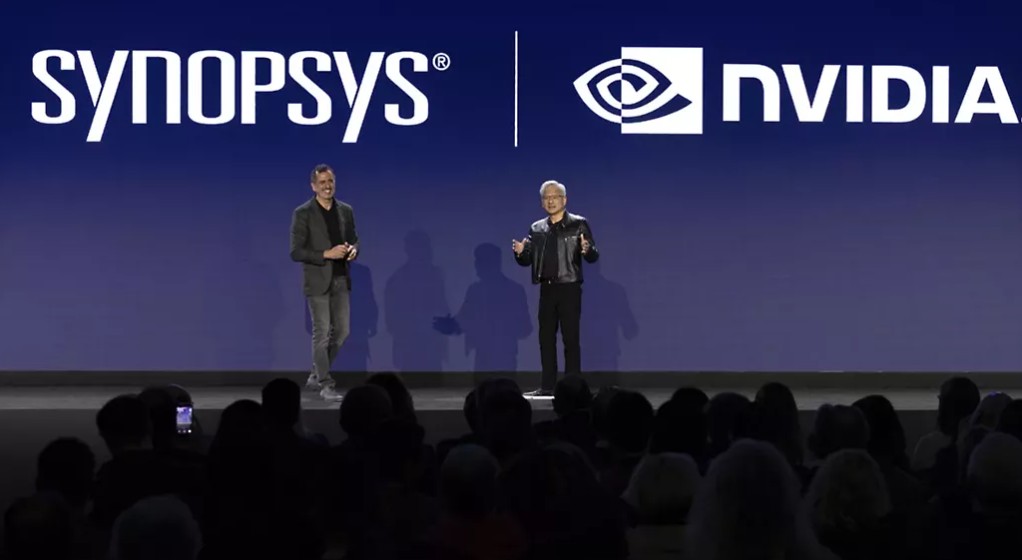
Industry partnerships extend across companies including Arm, Intel, NVIDIA, Samsung, and TSMC. A recent NVIDIA agreement integrates Omniverse technology into Ansys simulation tools for physical AI applications, including robotics simulation and industrial digital twins. NVIDIA CUDA-X libraries and AI-Physics technologies are also being used to accelerate compute-intensive Synopsys applications. Meanwhile, collaboration with TSMC connects Synopsys EDA and IP technologies with advanced semiconductor processes and packaging.
The ecosystem approach also expands the role of digital twins. Engineers can use validated virtual models to explore design alternatives, optimize performance, test software before physical hardware exists, and evaluate operational changes without disrupting production. Partnerships with cloud providers such as Microsoft and AWS supply the computing infrastructure needed to deploy these models at scale.
The article’s central argument is that engineering complexity now exceeds what isolated tools and organizations can efficiently manage. Synopsys sees interconnected technology, simulation, computing, and industry partnerships as the foundation for engineering increasingly complex AI-enabled systems.
