

Hardware development often advances through practical experimentation rather than starting with a fully integrated design. A collection of engineering examples from Hardware FYI illustrates this principle across energy storage, CAD interfaces, product testing, and infrastructure.
Tesla’s residential energy business provides one example. Its early Resi battery system combined modified Model S battery modules, a basic battery management system, and a commercially available Schneider inverter. Rather than developing every component internally, engineers added a controller that allowed the battery and inverter to communicate. Successive generations incorporated solar compatibility, metering, controls, and installation features. By the sixth generation, most of the system had moved in-house. The process shows how incremental development can gradually turn off-the-shelf components into an integrated platform.
Another example comes from CAD. The SpaceMouse gives designers six degrees of freedom for navigating three-dimensional models. Users can translate and rotate a model through physical movements of a puck. Inside, optical sensing detects these movements using LEDs, light meters, springs, and circuit boards, translating hand motions into intuitive digital control.
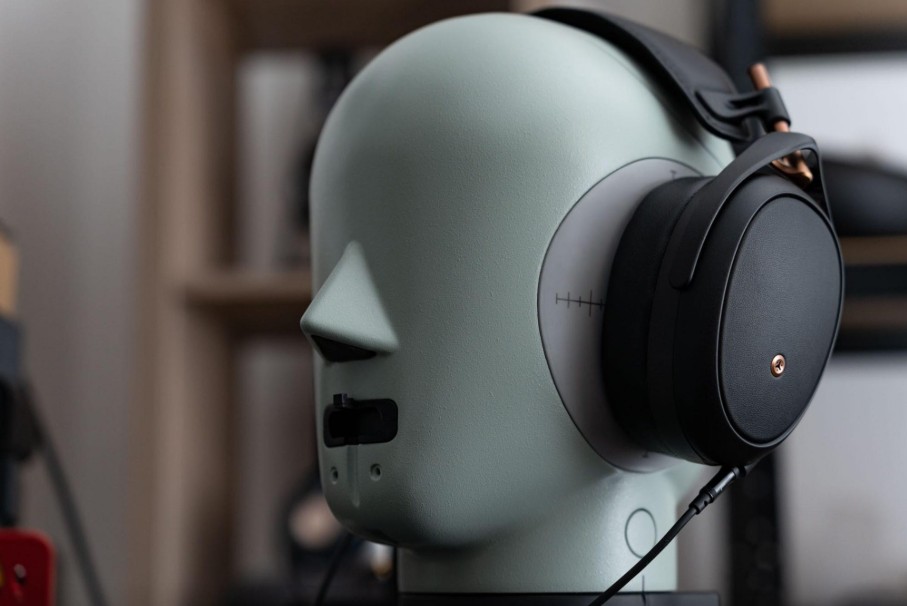
Product testing presents a different engineering challenge: reproducing human interaction consistently. Articulated finger probes determine whether users could accidentally touch live electrical components. Acoustic test heads serve a similar purpose for headphones and earbuds. Engineers place audio devices on simulated ears to measure frequency response, distortion, channel matching, and isolation. The artificial head is not intended to predict every listener’s experience. Its value lies in providing a repeatable acoustic load so engineers can compare designs under controlled conditions.
The Falkirk Wheel in Scotland demonstrates the same emphasis on thoughtful engineering at a much larger scale. The rotating boat lift replaced 11 conventional locks and uses counterbalancing to minimize the energy required for each rotation.
Together, these examples show that effective engineering often depends on iteration, repeatable measurement, intuitive interfaces, and designs that use physical principles efficiently.
