

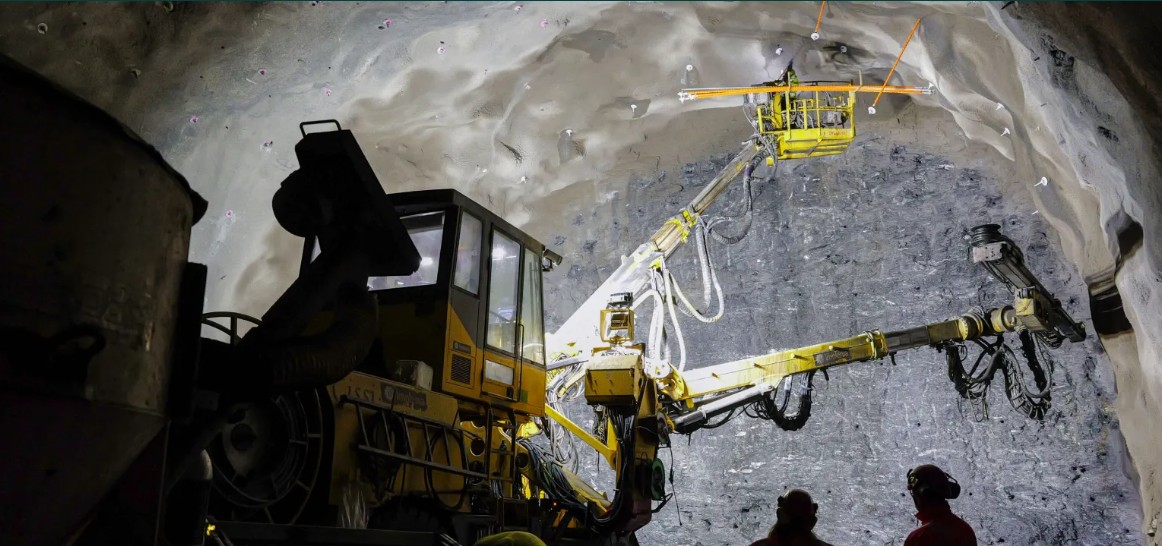
Norway is constructing the Rogfast tunnel, an engineering megaproject that will become the world’s longest and deepest subsea road tunnel when completed. Stretching approximately 26.7 kilometers beneath the Boknafjord and descending nearly 400 meters below sea level, the tunnel is designed to eliminate one of the largest ferry crossings on the country’s western coastal highway. Beyond shortening travel times, the project demonstrates how modern engineering can overcome extreme geological and environmental challenges to create more reliable transportation infrastructure, tells MIT Technology Review (full article available to subscribers).
The Rogfast tunnel forms part of Norway’s broader effort to modernize the E39 highway, a major transportation corridor linking cities along the country’s rugged west coast. Today, travelers must rely on multiple ferry crossings that are vulnerable to weather delays and operational disruptions. By replacing one of these crossings with a permanent road connection, the tunnel will reduce travel time, improve freight movement, and create a more dependable route for residents and businesses.
Building a tunnel at such depth presents unique engineering obstacles. Workers must excavate through hard bedrock while managing enormous water pressure, high rock stresses, groundwater infiltration, and demanding ventilation requirements. Engineers are using extensive geological surveys, precision drilling, controlled blasting, and continuous monitoring systems to ensure excavation remains stable and safe throughout construction. The project also incorporates twin traffic tunnels connected by emergency cross passages, enhancing operational safety and evacuation capabilities.
One of the tunnel’s most distinctive features is a large underground roundabout located about 200 meters below sea level. This subterranean interchange will connect multiple tunnel branches while maintaining efficient traffic flow, illustrating the complexity of the underground road network. Advanced ventilation systems, lighting strategies, and wayfinding features are also being integrated to improve driver comfort during the roughly 35-minute journey through the tunnel.
Digital engineering tools have played an essential role throughout the project. Building information modeling, three-dimensional geological mapping, and simulation technologies enable engineers to coordinate construction, evaluate risks, and optimize excavation sequences before work begins. These technologies also support long-term maintenance planning once the tunnel enters service.
Although Rogfast requires substantial investment, the project highlights the growing ability of civil engineers to deliver resilient infrastructure in challenging environments. By combining innovative tunneling techniques with sophisticated digital planning, Norway is creating a landmark transportation project that could influence the design of future subsea tunnels around the world.
