

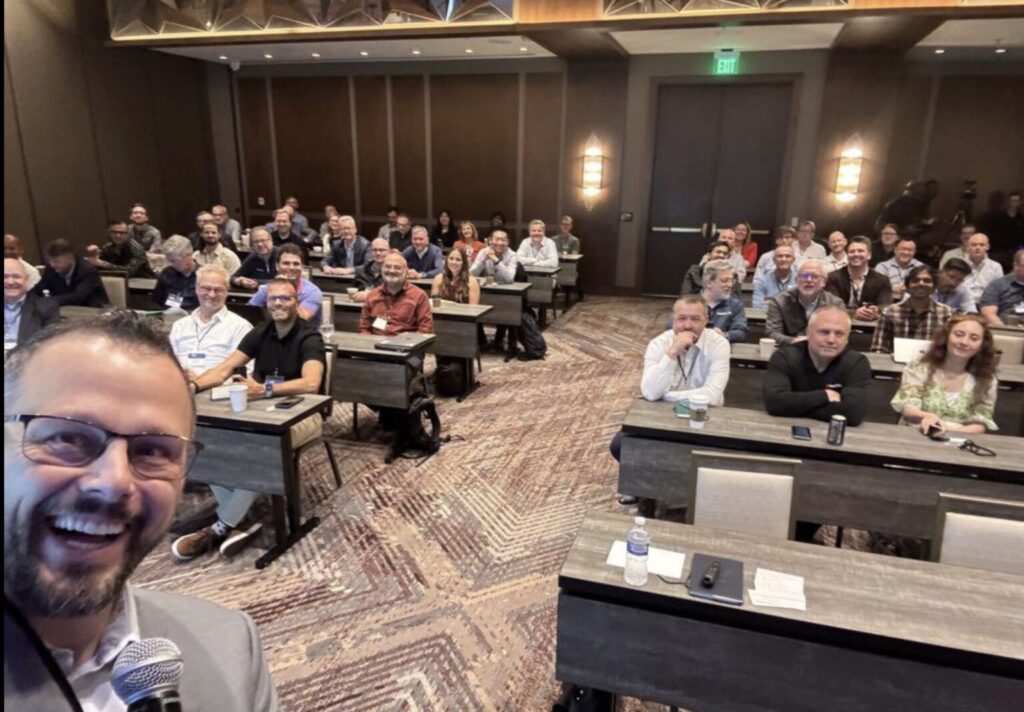
The article by industry commentator Oleg Shilovitsky, on his blog Beyond PLM, offers a concise set of notes from the summit. Among the major themes was the evolving CAD stack: at a session led by Tyler Mincey of Baukunst VC, the discussion focused on how AI is reshaping CAD workflows and tool architecture.
Another discussion centered on building companies and culture, featuring a fireside chat between Darius Mirshahzadeh and Ron Fritz. The focus was less on buzzwords and more on everyday behaviors, team dynamics, and creating environments where people can contribute meaningfully.
The “AI in engineering” panel underscored that while AI is still early in its deployment cycle, the momentum is real; companies such as CoLab, Luminary Cloud, Neural Concept, and C-Infinity are actively building AI-driven engineering tools.
The summit also took a broader view beyond manufacturing: in a session with Jesse DeVitte of Building Ventures, attendees explored intersections between AEC and manufacturing, and how data flows and business models are shifting in both spaces.
One of the final takeaways was the triad that the author calls the “Three A’s”: AI, Agile, and Additive. From the concluding panel with Ron Fritz and Jon Hirschtick (a CAD industry veteran), the message was clear: tomorrow’s engineering stack will rely on intelligence, speed of iteration, and additive manufacturing methods.
The author emphasized that while many sessions focus on tools and infrastructure, one of the strongest pull factors of the summit was the location and the people. The Austin venue, with its rooftop bar and suburb-calm setting, enabled conversations that do not happen in back-to-back Zoom calls.
In conclusion, the article reminds readers that attending live events still offers value: individuals, dialogue, and chance encounters matter for shaping the future of engineering software.
