

Hardware FYI examines several shifts across manufacturing and hardware engineering, led by a debate over whether industrial modernization requires new automated factories or better technology for existing ones. The article points to restaurants as a useful analogy. Software platforms modernized and connected existing restaurants rather than replacing them with centralized food-production facilities. A similar approach could help thousands of specialized machine shops become more productive and connected.
The argument contrasts this distributed model with heavily automated manufacturing ventures such as Hadrian, which recently raised $1.4 billion at an $8 billion valuation. Automation works particularly well when production is standardized and repeatable, but much U.S. manufacturing involves high-mix work. Software that digitizes existing factories could therefore prove more practical across much of the industry.
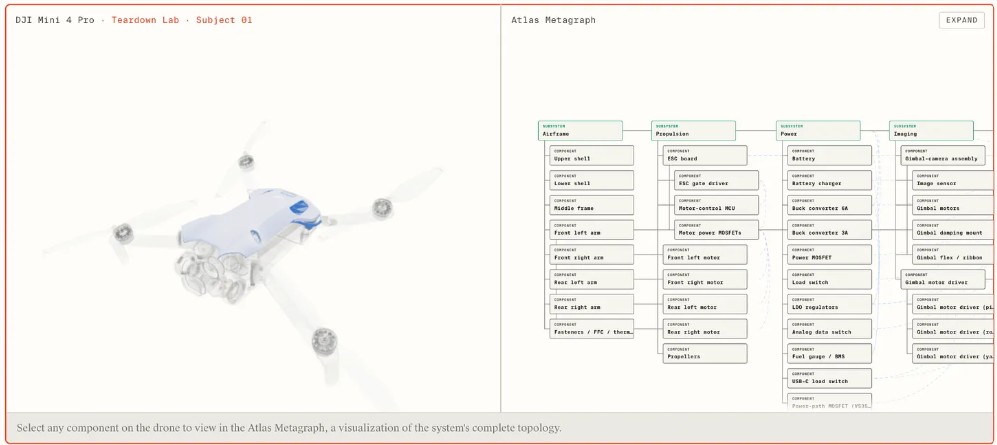
Hardware FYI also examines DJI’s dominance of consumer drones. A component-level teardown suggests DJI combines aggressive cost control with vertical integration. The company initially assembled off-the-shelf components to reach the market quickly, then moved more technology in-house as production volume increased. Its share of internally developed components reportedly rose from about 22% to 44% over four years.
Another theme is the changing engineering software market. Schneider Electric’s $22.6 billion acquisition of PTC places Creo and Onshape within a major industrial automation company. Hardware FYI suggests the deal reflects growing interest in connecting engineering and design data with factory systems, particularly as industrial AI expands.
The newsletter also highlights tools making hardware knowledge easier to access, including searchable public PCB designs and annotated semiconductor die images. Meanwhile, manufacturing companies expect AI to influence manufacturability, costing, quality, and inspection. Together, these developments point toward a manufacturing future shaped not only by new factories, but by better-connected existing facilities, accessible engineering data, and AI-assisted design and production workflows.
