

A wave of experimental computer-aided design tools is emerging from independent developers, open-source communities, and AI startups, signaling a period of rapid innovation in the CAD landscape. In his UpFront.eZine article, Ralph Grabowski surveys several projects that challenge traditional assumptions about how engineers and designers create digital models.
One of the strongest trends is algorithmic CAD, where users generate geometry by writing code instead of manipulating objects directly. Tools such as ForgeCAD allow designers to build and modify models using JavaScript linked to OpenCascade and OpenSCAD technologies. Changes to the code instantly update the model, while parametric sliders provide real-time control over design variables. The approach appeals to users comfortable with programming and offers a highly flexible method for creating parametric geometry.
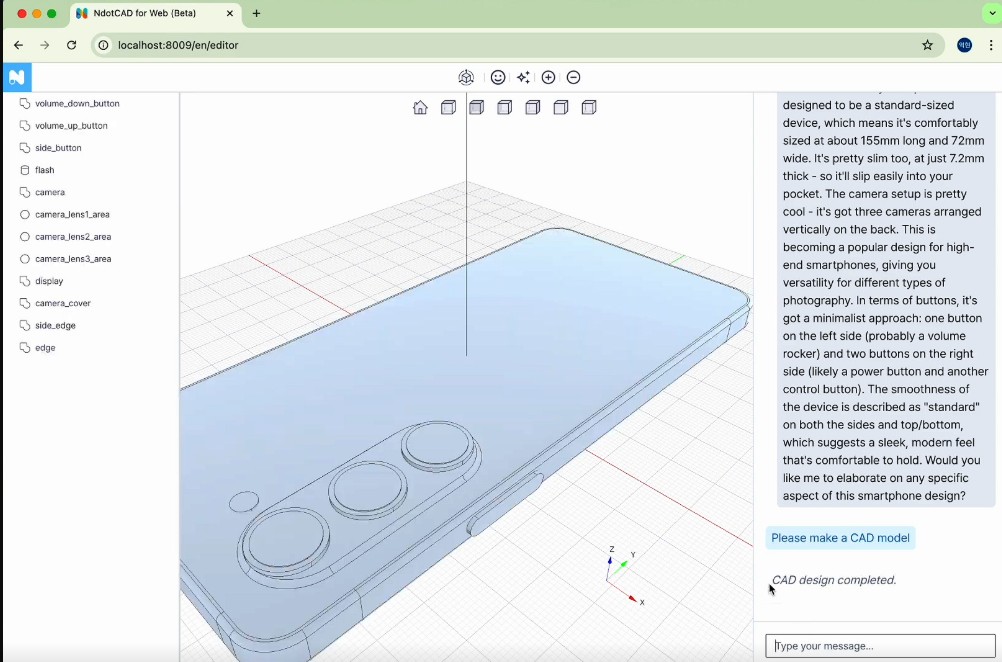
Artificial intelligence is driving another category of experimentation. Systems such as Trinix and Nova3D aim to convert text prompts, images, and sketches into manufacturable CAD models. These tools attempt to understand assemblies, component relationships, and engineering constraints rather than merely generating visual representations. Trinix, for example, claims to infer joints and structural details while exporting models in engineering-friendly formats such as STEP.
The article also highlights web-based CAD platforms, including CADara, which runs entirely within a browser. Browser-based deployment lowers barriers to entry by eliminating installation requirements and making experimentation easier. Other projects, such as Waterfall CAD, extend the OpenCascade kernel through programming libraries, giving developers additional tools for declarative solid modeling.
Grabowski notes that these innovations represent both progress and a return to earlier computing paradigms. While modern CAD has spent decades emphasizing graphical interaction, direct manipulation, and visual workflows, many experimental systems bring coding back to the forefront. For some users, editing source code may feel more direct than manipulating geometry through traditional interfaces.
The author also raises questions about the economics of AI-powered CAD. As AI providers increasingly charge closer to the true cost of computation, developers may need to pass those expenses to users through subscriptions, tokens, or usage fees.
Despite these uncertainties, the article portrays experimental CAD as a vibrant laboratory of ideas. Whether through programming, AI, or browser-based delivery, these projects are exploring alternative paths that could influence the next generation of engineering design software.
